UNESCO World Heritage Sites 2014: Piedmont, Italy.

It’s time folks!

UNESCO is putting together a new vote on the latest World Heritage sites, the best preservation technique the modern world has to offer. The chosen sites are being announced as I type this, but I’m sure all of you are wondering (including myself, honestly) what some of the significance behind these historical sites may be. And as one of my childish dreams (while I toil away with an AA degree in the service industry) is to one day work with UNESCO on these sites, I’ll be doing my own personal PR digging and pretending I’m some how a part of all of this grand occasion by doing a little research into the history of our new World Heritage Sites.

Vineyards of Piedmont, Italy.

Vineyards of Piedmont, Italy.

Most people have probably not heard of Piedmont, frankly, I being one of them. I have, however, heard of all of the peoples at one time being in control of this expansive Italian region. That being in a particular order: Celtic tribes, Romans, Burgundians, Goths, Byzantines, Lombards, Franks, Holy Roman Empire…sounds pretty familiar across Europe, no? And after all this confusion to claims, Piedmont eventually emerged as the Kingdom of Sardinia dating from the good ol’ Italian Renaissance to around the more modern 19th century. In fact, the region is no stranger to the heritage fame with the Palazzina di caccia of Stupinigi (save the jokes, please) being added to the listed, once belonging to the House of Savoy which acquired the kingdom in 1720AD.

Someone probably went "Baroque" after building this. *crickets*

Someone probably went “Baroque” after building this. *crickets*

But what Piedmont had been REALLY famous for was the booze. Or, in this case, a spectacular ability to make fantastic wine for loooong times. It was well known for its vines even in Ancient Roman times back when civilians guzzled wine like water with Pliny the Elder noting that the Piedmont region was the most favorable for growing. And that was back in 77BC, with about 2000 years in between, and Piedmont is still kickin’ the grapes with wrath. Again, when you consider how many various civilizations conquered (or re-conquered) the region, it’s a miracle the environment remained as relatively intact as it is today, especially since those dirty ancestor’s of ours loved to “salt the earth” whenever they didn’t feel like sharing.

Of related note to all this wino business was how strangely influential the grape was to the very essence of Italian culture, notably, the Italian Unification which is the whole gosh darn reason we have an Italy today. Ever heard of Giuseppe Garibaldi? The name should ring a bell, but if not, he was that dude who kicked the shit all over the world as well as personally super gluing the various Italian states together with his fantastic beard. Well, he was also a big-time winemaker who introduced the happy science French mixture to help protect the area’s vineyards. Because if there is one thing France was actually any good at defending…it was the wine. And, reminiscent of the elementary school tales of the American Revolutionary War where we all learned that Bostonians got super bloody peeved when their Earl Grey got taxed, the Austrians decided to double the tariffs of the Piemontese wine with predictable results which sort of kick-started the whole independence thing in the first place.

So, it makes sense that UNESCO would name the Vineyards of Piedmont, Italy as a World Heritage Site, an area that includes 5 wine-growing areas and the Castle of Cavour for good measure. Now we all have an excuse to go all Bacchus on this news, right?

Aww, isn't it cute?

Aww, isn’t it cute?

300: Rise of Artemisia

This is happening.

No one really expects a film based on a graphic novel based on a historical event to remain loyal to the latter. Source material taken from any form whose primary audience pounds out their vicious objections to any embellishments on a keyboard caked with Doritos residue and the sticky remains of a novelty energy drink, is going to be taken more seriously than a few scattered nerds nose deep in Herodotus’ The Histories. Mostly because the first group has the unique and senseless ability of lambasting anything they love to hate with enough down-votes across social media, even Mussolini would feel popular. So with the now swiftly approaching release date of Warner Bros’ 300: Rise of an Empire, I doubt anyone is supremely concerned with historical accuracy. I’m guessing the main discussion sparks with a critique of slow-mo, how realistic and plentiful painted abdomens will be, and a nostalgic exchange of celebratory memes.
Yield at ‘Madness’

But if there is one thing I really do hope, nay, EXPECT, the movie to get right, is the characterization of Artemisia.

For a film promising to portray itself in an epic scope and deliver on all that delicious violence and bloodshed, there really isn’t an absence of it in the source material. And when it comes to Artemisia, no one, not even thousands-of-years-dead historians, can deny that she was a sassy man-trouncing Mutha’Amourous Congresswoman‘.

Artemisia was queen of the Persian providence of Caria, which she gained because her son was still a noob-fledgling after her husband died. Clearly, nobody gave a shit about him though because I never came across a name for the father, or even the son for that matter, in my readings. And who the hell would when Artemisia was bringin’ the feminism as the only female naval commander in a time period when women were expected to cover themselves to protect their chastity. (Apparently, Cyrus the Great’s influence…clearly not in relation to Miley Cyrus as she believes in neither of those things)

Her story predominately begins with the various re-tellings of the Greco-Persian wars, which for the folks who are here because of 300, are the collection of battles between Persia and the city-states of the Greek world. Not much is really known about Artemisia’s life beyond what battles she contributed her skill in and Herodotus offers little insight beyond an awe of confusion over her presence at all given this text:

There is no need for me to mention all the other subordinate officers, but there is one name which I cannot omit—that of Artemisia. It seems to me a marvel that she—a woman—should have taken part in the campaign against Greece.

But since he was Greek, there’s really no surprise there. Actually, I would infer that because Herodotus himself was born in Halicarnassus of Caria, then under the rule of Artemisia’s grandson continuing a somewhat familial regional legacy, he would find her loyalty surprising given his own rather than in full part because of any misplaced view on women. Clearly, he did have some respect for her, referring to her reasons for joining under Xerxe’s command as

there was consequently no necessity for her to do so. Her own spirit of adventure and manly courage were her only incentives.

But that probably has to do with the common association of comparing her accomplishments to that of a man and not a woman, which I will show more of in a bit. Either way, despite her gender, she was well known for her wisdom and intelligence, being one of Xerxes’ most promising advisers. Right before the (SPOILER ALERT: “ill-fated”) Battle of Salamis, Xerxes sent his lead military commander Mardonius [Remember this quote, guys?] to each one of his fellow commanders to retrieve their advice for the king on their opinion about raging a sea battle against the Greeks. Every single one of them, save for Artemisia, was in favor of engaging in the tactlessly arrogant attack. Without missing a beat or sparing offense, she is said to have replied with these ‘kind’ words;

Mardonius, tell the king for me that this is the answer I give—I, whose courage and achievements in the battles at Euboea were surpassed by none: say to him, “Master, my past services give me the right to advise you now upon the course which I believe to be most to your advantage. It is this: spare your ships and do not fight at sea, for the Greeks are as far superior to your men in naval matters as men are to women. In any case, what pressing need have you to risk further actions at sea? Have you not taken Athens, the main objective of the war? Is not the rest of Greece in your power? There is no one now to resist you—those who did resist have fared as they deserved. Let me tell you how I think things will now go with the enemy; if only you are not in too great a hurry to fight at sea—if you keep the fleet on the coast where it now is—then, whether you stay here or advance into the Peloponnese, you will easily accomplish your purpose. The Greeks will not be able to hold out against you for long; you will soon cause their forces to disperse—they will soon break up and go home. I hear they have no supplies in the island where they now are; and the Peloponnesian contingents, at least, are not likely to be very easy in their minds if you march with the army towards their country—they will hardly care to fight in defense of Athens.
If, on the other had, you rush into a naval action, my fear is that the defeat of your fleet may involve the army too. And put away in your heart on other point, my lord, to be considered: good masters, remember, usually have bad servants, and bad masters good ones. You, then, being the best master in the world, are ill served: these people who are supposed to be your allies—these Egyptians, Cyprians, Cilicians, Pamphylians—are a useless lot!

The rest of the commanders held their breath, sucked in their retorts if they were included in the closing insult, or waited eagerly for Xerxes to put her silly inferior brain in place. Too bad for them though, that Xerxes, who usually has such sound judgments more in line with their intellectual capacity, greeted Artemisia’s opinion with the most highest of esteem, in fact notably encouraging her with more favor for giving such an admirable and sound advising. However, though pleased with Artemisia’s skepticism, Xerxes’ astronomically amorphous ego was certain that his presence alone would foster victory where it had since lacked. And so the Battle of Salamis was soon underway.
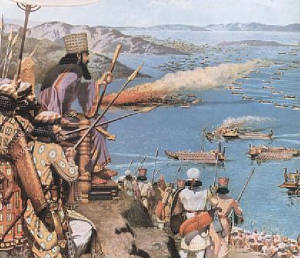
"WHY ISN'T MY FACE MAKING THEM WIN?!"

“WHY ISN’T MY FACE MAKING THEM WIN?!”

So, presumably not all that begrudging given her affection for baddassery, Artemisia sailed into battle regardless. According to Polyaenus (A Macedonian author who dedicated one of his works to Marcus Aurelius *bravo*), in battle, Artemisia’s long ship carried different flags, Greek, Barbarian, etc. which she would fly intermittently given her chosen enemy, the ability to sneak attack unawares. She used this technique in full when, after her comrades and allies fell apart in abstract chaos in the wake of their combined utter defeat, she found herself being chased by an Athenian Trireme with no chance of escape as she was completely surrounded by enemy and friendly ships alike. Throwing up the colors and ramming a friendly ship captained by the king of Calynda, Damasithymus, she made herself appear an ally, which led the Athenian Trireme to give up the chase and let her free. It is said too that, technically, Artemisia killed two pigs with one stone in that single maneuver, as apparently, she and Damasithymus quarreled earlier during the campaign and he was now…well, sunk and dead. Herodotus couldn’t fully comment whether there was malice in her intent. But you know what they say about a woman scorned…

Artemisia’s act of ingenious revenge was witnessed by Xerxes and his camp of overlookers forcing him (and Herodotus) to fall more deeply in love respect for her than ever before. Because that was freaking awesome. Xerxes famously saying:

My men have turned into women and my women into men.

And since Artemisia was the only woman in that battle, we all know what he really meant. You go, girl.

After the crushing defeat, Xerxes wondered out loud, again, what he should do next. And despite Mardonius’ insistence to continue an invasion of Greece and the Peloponnese, Xerxes’ was eager to follow Artemisia’s advice. Which, after calling Mardonius a slave a few times for good measure, convinced the King to return home to safety which he was more than happy to oblige. He sent Mardonius off to battle (and further failure) and Artemisia with compliments and his sons to Ephesus.

And so concludes the exploits of Artemisia. Living on in name for an Iranian destroyer and as one of the titular characters in a Hollywood blockbuster movie.

Primary Sources:

The Histories, Herodotus. Book VII-VIII. 68-9; 87-8; 101-3.

Stratagems of War, Polyaenus. Book VIII, 53.3.

Secondary Source:

Mackey, Sandra & Harrop, Scott (1996). The Iranians: Persia, Islam and the Soul of a Nation.
Kings and Their Mistresses

As Caroline had feared, Henrietta was replaced by younger, prettier, more manipulating mistresses. Dying from an umbilical rupture in 1737, wrapped in towels as her intestines spilled out, the queen, sensible to the end, suggested that George remarry. But the king, heartbroken, hovering near her bed in her last agonizing moments, swore he would have only mistresses and never remarry.

“Oh, my God!” the dying queen said in French, with characteristic practicality, “that won’t make any difference!”

-Excerpt from Sex with Kings by Eleanor Herman. Famous last words of Queen Caroline to her gallivanting husband King George II of England.

History Hunks: Antinous

Gentlemen...

Gentlemen…

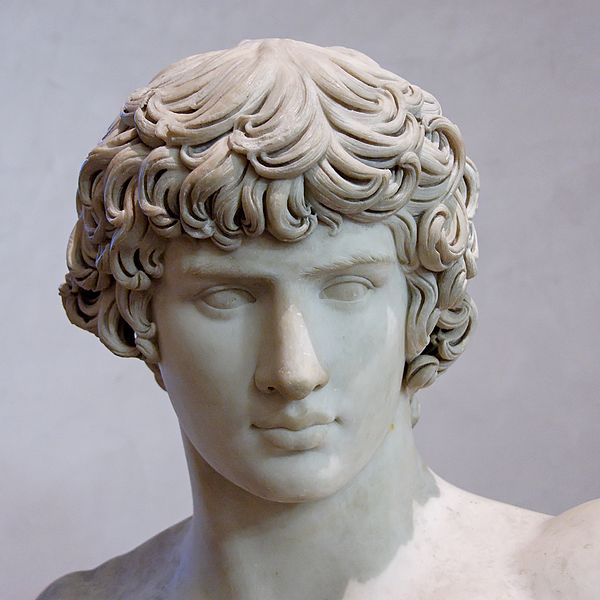
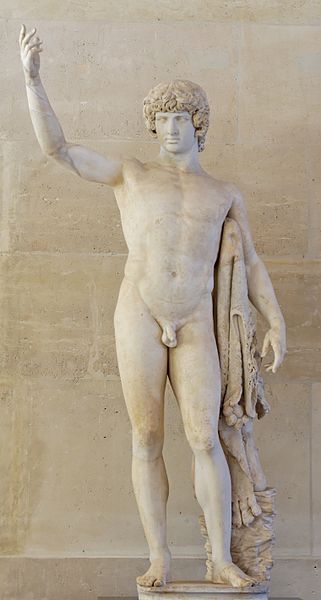
Ladies and gentlemen, but mostly gentlemen, nah just gentlemen; This curly haired cherub is Antinous. He was known as one of the most beautiful men of the Classical world by contemporary scholars and our sources. Whether or not this was the widespread case or the desperate attempt of a certain Emperor to justify the deification of Antinous in his grief, I suppose we’ll leave to the Classical Antiquity Beauty Pageant. But, honestly, not really anything is known about this guy. Except that Cassius Dio managed to find out that he was from Bithynium. And, uh. Yep.

I've seen more rippling torsos on a statue. I mean, just sayin'.

I’ve seen more rippling pectorals on a statue. I mean, just sayin’.

Anyway, the reason this guy is famous and why you can pretty much find his bust/image in quite a few museums across Europe is because he was the “boy favorite” of Emperor Hadrian of wall-building-in-Britain fame. If you don’t know what is meant by ‘boy favorite’, then I’ll tell you that after Antinous’ death in 130AD, a notorious tabloid-like and frequently debunked historical source The Historia Augusta was talking some smack:

While sailing on the Nile he [Hadrian] lost his Antinous, for whom he wept like a woman.

And while you SHOULD generally take whatever this source says with a grain of salt, it is believed by most scholars that their relationship was fairly sexual. I mean, unless you’re that one lone denier who thinks it is completely platonic for a guy to venerate and order the people under his will to erect statues in honor of Antinous’ beauty and worship him in a cult fashion. Mhm. Yeah. “Just friends”.

What I find most curious about the story between Hadrian and Antinous is what information we have concerning his death, drowning in the river Nile.

Some sources say that he was sacrificed, either by himself or others, because of his beauty.

In the case with Cassius Dio’s writing he seems to suggest:

…and he died in Egypt, either by falling into the Nile, as Hadrian writes [lost], or, as the truth is, having been offered in sacrifice (hierourgethesis). For Hadrian was in any case, as I have said, very keen on the curious arts, and made use of divinations and incantations of all kinds. Thus Hadrian honoured Antinous – either on account of his love for him, or because the youth had voluntarily undertaken to die for him

Sounds like something a Shakespearean character in love would do.

So, what do you all think? Hot or NOT?

A Little Sampling From the Chicago World’s Fair 1893

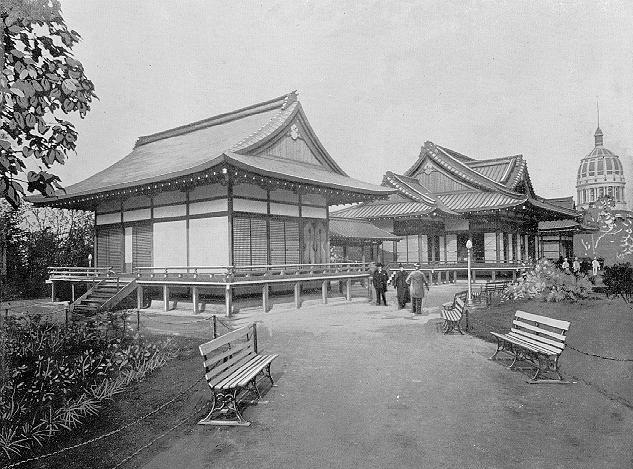
Japan. Ho-o-den or "Phoenix Palace".  Designed by Masamichi Kuru.

Japan. Ho-o-den or “Phoenix Palace”. Designed by Masamichi Kuru.


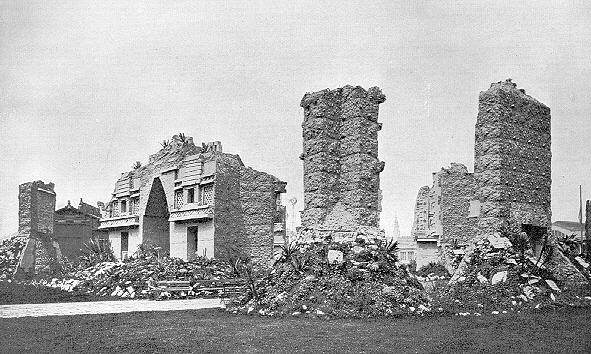
Aztec Temple.

Aztec Temple. Sacrifical alter not included…I think.

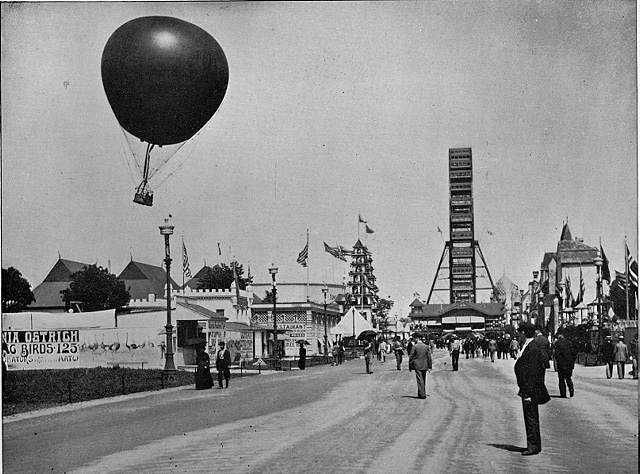
The Midway. The balloon pictured was later destroyed in a tornado storm while the Fair was still open.

The Midway. The balloon pictured was later destroyed in a tornado storm while the Fair was still open.


Cafe in the Turkish Village.

Cafe in the Turkish Village.

Replica Viking ship.

Replica Viking ship.

Replicas of Columbus' ships. Hopefully not to scale...

Replicas of Columbus’ ships. Hopefully not to scale…

The FIRST Ferris Wheel. What most people today think of as the most boring ride was at the time an unthinkable marvel.

The FIRST Ferris Wheel. What most people today think of as the most boring ride was at the time an unthinkable marvel.

The Electricity Building. Edison and Tesla were both present. A collective defecation was probably experienced by most visiting this building as this was likely the first time ever witnessing electricity. Also, the nerds in our time are probably overcome with the thought of an Edison and Tesla battle.

The Electricity Building. Edison and Tesla were both present. A collective defecation was probably experienced by most visiting this building as this was likely the first time ever witnessing electricity. Also, the nerds in our time are probably overcome with the thought of an Edison and Tesla battle.

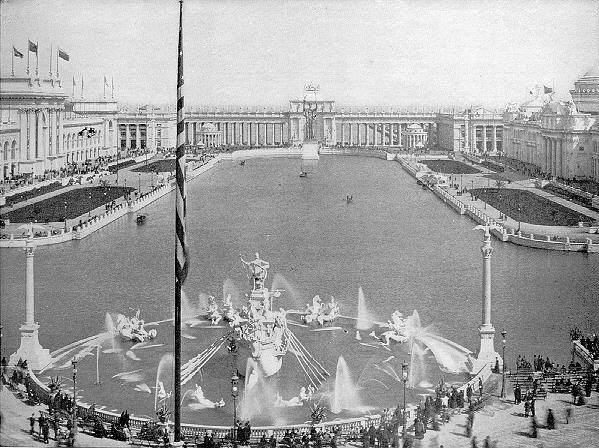
The good kind of Water Gate.

The good kind of Water Gate.

The Court of Honor. Reportedly the most popular aspect of the exposition.

The Court of Honor. Reportedly the most popular aspect of the exposition.

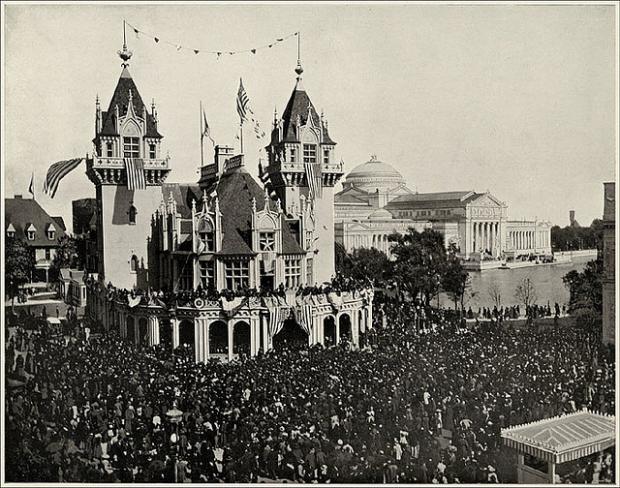
Those are people. Still think Disney World is bad?

Those are people. Still think Disney World is bad?

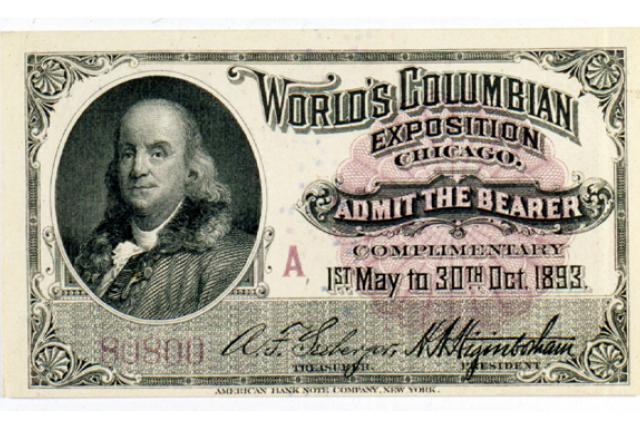
Can't deny Franklin's sultry brow. That'll be 50 cents admission.

Can’t deny Franklin’s sultry brow. That’ll be 50 cents admission.


Pictures courtesy of Boston College, and Field Musuem.

Information absorbed after reading The Devil in the White City by Erik Larson. 2003.


Don’t ‘Cross’ Michael II.

On Christmas Eve of 820, the Emperor Leo V condemned the pretender Michael II to death by the rather bizarre method of having him tied to an ape and thrown into the furnaces that heated the imperial baths. Before the execution could take place, Michael’s supporters dressed up as monks and crept into the imperial palace to attack the emperor. Leo reportedly defended himself for more than an hour armed with nothing but a heavy metal cross that he swung around wildly before succumbing to the blades of his assailants. In what was surely the most undignified coronation in Byzantine history, Michael II was hastily brought up from the dungeons and crowned with the chains of his captivity still around his legs.

Found in Lost to the West: The Forgotten Byzantine Empire That Rescued Western Civilization written by Lars Brownworth.


UPDATE!

So, I’m a little preemptive in saying that I’ve had this blog for about a year now.  But, let’s be honest, what work was I really going to do from now to April?

My main goal in starting this blog was the hope that I would learn something about History that I couldn’t ordinarily do on my own. I was hoping to update frequently and cultivate an audience that would be able to teach me something new about whatever topic I was covering. I secretly wished someone would correct me and not just treat me like a Wookiee. I was hoping I wouldn’t win all the time and that whatever bias I was harboring would stand corrected.

But that didn’t really happen. At all actually.

I wasn’t really all that into updating either. I learned A LOT of crazy cool history stuff in preparations of many unpublished entries. I just never felt like sharing it with the rest of you and that’s a real shame. A real dick move. A real Commodus move. I even went as far one point in contacting my old professor and discussing the merits of the Lead poisoning in Rome theories and how it related to wine consumption, which basically ended up being a total annihilation of this one scholar’s ideas and we left it at that and I never published a word but learned a lot. I even got caught in a mistake like I always wanted. I was using Pliny the Elder as a source without the forethought in realizing the time difference between his lifetime and another sources. I was like, “Duh! Pompeii and Pliny would have been far gone and scorched by then making this source entirely irrelevant to the argument!” The main thing is, I didn’t bother sharing any of the amazing things I dug up and that defeats the entire purpose of keeping this blog.

One of the coolest things I looked into was the accuracy of Prima Nocta and I would say that I get a couple hits on that one daily. And that’s just from people being curious and searching for themselves on whether or not it was a real thing and stumbling across my page for answers. I want to see more of that stuff. I want to be that go to informant for the casual historian. And there was even one incident where one of my posts circulated around Reddit’s TodayIlearned which left me feeling frightened at the sudden and enormous site traffic that happened over night and really quite honored.

So instead of being a lazy asshole, which has become my new life statement as some of you who follow other deeds of mine know by now, I’m going to attempt to follow a more strict updating schedule on this blog. Once a week I want to squeeze in a full-fledged research project, one historical figure profile, and the rest different forms of interesting things in history. I’ve got my days planned but I’ll leave them a surprise for now.

My new goal now is just to finish what I say that I’m going to do. Which for now is update Monday-Friday. So if I don’t, call me out because dang I can’t keep getting away with this anymore.

See you tomorrow.

History and Breaking Bad: Cap’nCook

JessePinkman

Saved a tree and ate a beaver instead.

If you’re one of the 10 million or so people in America who watch Breaking Bad, you’re probably familiar with the legendary CapnCook. Famous for being a mid-20’s hypersensitive Chemistry class-flunking addict, Jesse Pinkman made a living as a small-fry Meth manufacturer and dealer until Walter White stepped into the picture coloring his world blue and green and rather chili powderless.

BUT if you’re one of the 25 people who supposedly read this blog, you’re probably aware that we’re about to traverse into the dark and dusty recesses of historical fact. But not really because I hope at least some of you know where we’re going with this.

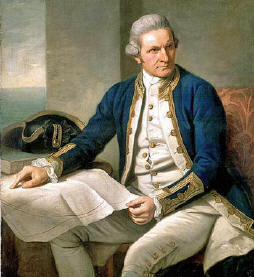
Who was the REAL Captain Cook?

Tyra told me to do my 'fierce' face.

Tyra told me to do my ‘fierce’ face.

That would be none other than Captain James Cook of the British Royal Navy at your service, your majesty!

Born in 1728 in Yorkshire, Cook moved to a port town when he was 16 going on 17 to apprentice in the merchant navy. Unlike his fellow colleague Jesse Pinkman, real Cook studied various subjects, including algebra, geometry, navigation and any other course that would lead him to excel in his future career path and volunteered service in the Seven Year’s War after his studies were complete.

After a stint in the Royal Navy surveying Newfoundland, which would become the first large-scale and scientifically accurate mapping of the area, James Cook was enlisted on three separate voyages around the Pacific Ocean, climbing in rank and prestige, until he became captain of the HMS Endeavour/Resolution and famous for filling in previously unrecorded areas of the map. He was also the first to circumnavigate New Zealand (That we know of) and the first European contact for some as of then undisturbed peoples. He also became Scurvy’s number one enemy.

I whose ambition leads me not only farther than any other man has been before me, but as far as I think it possible for many to go…

His Third Voyage, and most famous for reasons we will get into,  led him to explore the Islands of Hawaii, becoming again, the first European contact with the natives. He managed to land his ship at the same time that the native Hawaiians were celebrating their harvest festival. There is some academic debate about whether or not Cook and his crew were deified by the natives, but it was clear that Cook got along well with the Hawaiians in a months time. His crew was referred to as ‘Goblins’ but those same sources refer to the leader of these Goblins (being Cook) as being a generous and kind man who was particularly attentive and fatherly towards the children.

After the festivities, Cook and his crew sailed off to continue their voyage around the North Pacific but after breaking his ship’s foremast, Cook came back in desperate need of repairs. Apparently this time, the Hawaiians weren’t all to pleased with the Europeans return and a considerable amount of animosity grew between the bunch. After island thieves stole one of Cook’s small boats, he attempted to hold one of the natives as a hostage until the stolen item was returned, as was common practice on the islands. This time, however, Cook tried to hold the Hawaiian King in exchange which for obvious reasons did not go over so well with his subjects, and in his frustrations and possible fear of the growing riot, Cook shot and killed a man. This of course caused the Hawaiians to whip up into a violent frenzy, chasing the crew back to the beach and attacking him on the surf.

In his last moments, before being clubbed and stabbed to death, it was recorded that;

Cook immediately gained control of himself; his last gesture, as he was struck down into the water on the beach, was to his own men to stop firing.

After the crew escaped, the body of Captain James Cook was prepped and treated in the same practice by Hawaiians as an elder or chief would have been and thanks to a wealth of appeals from the crown, the remains of his body was returned to Britain for a proper burial at sea.

"We want the 99.1% pure Meth!"

“We want the 99.1% pure Meth!”

Hmmm. So maybe there isn’t much in the relation between Jesse’s moniker CapnCook and the real deal, but are you at least sensing some allusions to a certain Breaking Bad character? Ramesses II Walter White, perhaps?

Ze sources;

On the Character of Captain James Cook. J.C. Bealehole. The Geographical Journal. Vol. 122, No. 4 (Dec. 1956).

Captain Cook’s Journal During the First Voyage Around the World. pub. 1893 (Early life insight)

Taking the Bull by the horns

Image

Ladies and Gentlemen, this is called a ‘Rhyton’.

This isn’t an ordinary ornament (heh.) in which one displays their manly prowess on the mantel after wrestling with the beast ala Commodus Hercules.

No.

This is for drinking folks. Well, actually, more so it was used in ceremonial pourings of wine in honor of the dead much like modern traditions. But I wouldn’t be surprised if some of these were made for good ol’ party times. So toss out your German Beersteins! THIS is the way to do it!

Congrats, Knosses, on your badassery.

A Touch of Classical Wisdom V

Socrates used to call popular beliefs “the monsters under the bed”–only useful for frightening children with.

Marcus Aurelius, Meditations.180 c. AD