Christmas Psychosis

‘Tis the season to be jolly, kiss under holly, and have a psychotic break of melancholy. Christmas can often be paradoxical in how much people genuinely love the holidays by counting down the days as early as July or putting up trees well before little kids in costumes harass their neighbors for candy. Others approach the festivities with dread, reminiscing of long-dead loved ones and family traditions, or generally being a grouchy old humbug. For those unfortunate individuals in the latter category, the Christmas season heralds a harbinger of mental illness–a cyclical wave of psychotic woe canopied by snow and the feverous delusions of a Grinch-like low. And also an epidemic of rhymes.

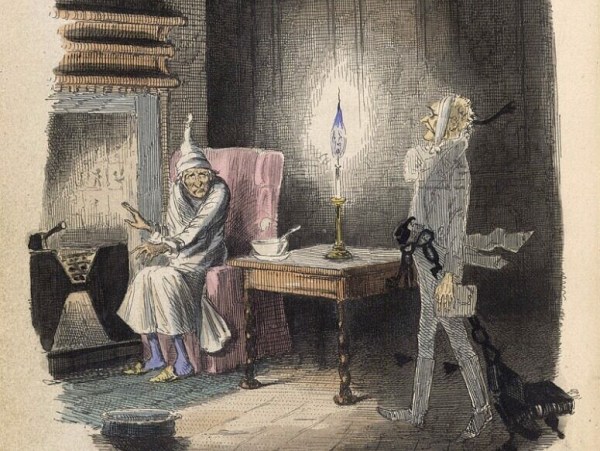
‘Christmas Psychosis’, a phenomenon largely felt by those like me working in mental healthcare who notice a surge of crisis beginning in late November through to the new year, is the idea that something about this time of year triggers a wave of renewed psychotic symptoms in a population already prone. Perhaps one of the most famous iterations of this case is the fictional Scrooge finding himself haunted by hallucinations of ghosts representing the past, present, and future Christmases. A Christmas Carol is a seasonal classic, many of us grew up seeing it performed in theaters, and Charles Dickens was no stranger to depicting bouts of psychotic depression in his works (Garratt, 2022). But is the idea that psychosis comes but once a year, with such prevalence, we ought to leave it out a tray of cookies, one that’s based in reality?

On a scale of 1-to-psychotic, how you doin’?

Since at least the 1950’s, some psychoanalytic thought has suggested that neuroses around Christmas time were because the celebration was focused on the birth of Jesus, the ultimate God’s favorite child over the rest of us, and that this brought up unresolved feelings related to competing against our siblings (Boyer, 1955). As the older and obviously favorite child who was Christmas-gifted the PlayStation over my brother, I can’t say that I’ve ever felt triggered by Jesus for having his own holiday. Though there is some evidence to suggest that being around Christmas-y things can lead to a negative psychological impact on people who are not religious or participating in festivities, who may already be dealing with feelings of exclusion (Schmitt, et al., 2010). There is even a bizarre phenomenon known as White Christmas effect, where researchers use Bing Crosby’s version of the song to study participants’ capability of auditory hallucinations. In traditional versions of the study, the song would be played briefly, and then white noise would be played for the participants. They would be asked if they could hear the song through the white noise, with around half of the people saying they could, and over a majority of schizophrenic participants stating the same. But many researchers suspect the general population may be reporting hallucinations because they were expected to or because they may already be prone to flights of fancy, rather than because songs about Christmas cause psychosis (Scott & Leung, 2025). Though I certainly do feel like losing my mind when Christmas songs are played on retail loops before Thanksgiving.

Is Santa Claus real or just a figment of your imagination? If you see elves, please call 911

But surely there must be an uptick of emergency room visits when it seems like everyone and their dog spends the majority of winter slightly unhinged. That, too, appears difficult to determine. Some studies show there certainly does seem to be an increase in ER visits for psychiatric reasons during the holiday season (Halpern, et al., 1994), but others show that there may even be less utilization of the ER during the holidays for mental health, despite what we assume about psychosis season (Schneider, et al., 2023). However, there does appear to be a noticeable uptick in miserable feelings around Christmas and alcohol-related deaths, with the period after the holidays showing the real increase in psychiatric hospitalizations (Sansone & Sanson, 2011).

So, basically, Christmas Psychosis is all in our heads. Fitting perhaps, but not an unjustifiable conclusion given how crazy things get around this time of year. I will say this, however, if there is any truth to the matter of psychosis for Christmas, maybe watch how much nutmeg you’re putting in your eggnog! That DOES cause hallucinations (Ehrenpreis, et al., 2014).

Fact Check it, yo!

Ehrenpreis, J. E., DesLauriers, C., Lank, P., Armstrong, P. K., & Leikin, J. B. (2014). Nutmeg poisonings: A retrospective review of 10 years experience from the Illinois Poison Center, 2001–2011. Journal of Medical Toxicology10(2), 148-151.

Garratt, P. (2022). Household ghosts and personified presences. In A. Woods, B. Alderson-Day, & C. Fernyhough (Eds.), Voices in psychosis (p.153). Oxford University Press.

Halpern, S. D., Doraiswamy, P. M., Tupler, L. A., Holland, J. M., Ford, S. M., & Ellinwood Jr, E. H. (1994). Emergency department patterns in psychiatric visits during the holiday season. Annals of Emergency Medicine24(5), 939-943.

Sansone, R. A., & Sansone, L. A. (2011). The Christmas effect on psychopathology. Innovations in Clinical Neuroscience8(12), 10.

Schmitt, M. T., Davies, K., Hung, M., & Wright, S. C. (2010). Identity moderates the effects of Christmas displays on mood, self-esteem, and inclusion. Journal of Experimental Social Psychology46(6), 1017-1022.

Schneider, E., Liwinski, T., Imfeld, L., Lang, U. E., & Brühl, A. B. (2023). Who is afraid of Christmas? The effect of Christmas and Easter holidays on psychiatric hospitalizations and emergencies—Systematic review and single center experience from 2012 to 2021. Frontiers in Psychiatry13, 1049935.

Scott, M., & Leung, T. T.-C. (2025). I’m whispering a white Christmas: masking relations in hallucinatory speech. Language and Cognition17, e71.

History and Psychosis

The Scream by Edvard Munch (1893). As the story goes, Edvard was out for a walk shortly after his sister had been committed to an insane asylum. Suddenly, the skies turned red and he sensed ‘a scream’. He depicted this experience of psychosis in his most famous painting.

The crazy thing about psychosis is how misunderstood it is in the popular imagination. What does it mean to have and how do the symptoms manifest?

For those who have been following my blog for years, you’ll have noticed I’ve taken a bit of a hiatus—emerging every so often to post a vulnerable little missive on heartbreak. It shouldn’t be too difficult to piece together the story of what happened, but since then, I’ve kept a promise to that teenager I tutored and subsequently lost when their mother and I were forced to part ways. Back then, I decided to go back to school to earn my degree and eventually become licensed to practice therapy to help others—a goal I had shared with both mother and child. What inspired the change of career path for me was that teenager and the struggles they dealt with while navigating an unsupportive family life as an openly trans kid. Eventually, the pressure and stress of constantly fighting with family led to mental health issues for that teenager which resulted in hospitalization at a psychiatric clinic. There, they shared their experience with symptoms of psychosis with doctors.

Psychosis is defined as an experience that denotes a break from reality–this can range from delusions, hallucinations, and/or bizarre behavior such as disorganized speech. It is a symptom, not a disorder, and can be featured in diagnoses such as Schizophrenia or Major Depressive Disorder. Causes can range from extreme stress, and substance use, to genetic predisposition.

I felt helpless at the time and a little bit scared. What does it mean if someone I love and care about like my own child, hears voices that tell terrible, self-degrading things? What could we do to help? Would they be okay? Part of that promise was doing everything I could to involve myself in uncovering those answers. And though, per their mother, I am not allowed contact with that teenager any longer—I can do everything in my power instead to help those like them. The reason that I have been unable to update this blog is that I have been busy working at a psychiatry clinic since last year and becoming part of the team at our university that specifically treats patients dealing with first-episode psychosis and the research meant to provide hope for the future.

Basically, I’m doing the damn thing. Sempre ❤️

This is, however, my history blog playground for my research dumps where I can humorously recount the things I’ve either taught myself or felt like sharing with the public. Now feels like the perfect time to merge both passions, exploring the presence of psychosis in well-known historical things, events, or people. From the Oracle of Delphi to insanity contextualized historically, to any excuse to write about how much I love Joan of Arc. Famous individuals and artists in history have experienced psychosis and come out making some of the most beloved works in the world…one of them cut his own ear off for good measure too. Many Kings, Queens, and rulers have also suffered and so have others when the consequence of mental illness often leads to wars of succession. Mostly, I hope to also provide a picture of psychosis that is less terrifying–to shed light on its frequency and treat it with the comfort we have in more common mental health struggles like depression. Let’s de-stigmatize. People with psychosis are unwell but they are not inherently dangerous nor should they be treated as such. Let me show you all the brilliant people in history who had it and went on to do extrodinary things, like inventing calculus. Though, I suppose you could say someone would have to be a little mad to make sense of it in the first place.

‘Madness’ in history hadn’t always included the modern concept of psychosis. The term itself was introduced to psychology in the 19th century, and it’s important to remind the audience that some experiences in history will fit the definition of psychosis but may also fall under the umbrella of a cultural or religious phenomenon for some. Think of the prophets and saints, those who prayed and spoke to gods or heard prophecies, or perhaps figures who developed a grandiose view of themselves and thus the confidence to back it (Did Alexander the Great experience psychosis then? Let’s discuss.) Part of this series will be meant to think about the causal relationship between psychosis and ‘normal’ experiences like superstitions and ghost stories. And some of it will be debunking the usual tomfoolery of myths like the Schizophrenogenic Mother or taking a look at the Four Humors theory of the ancient world. Naturally, we’ll need to dismantle ‘hysteria’ and talk about how Nellie Bly should be everyone’s hero. I’ll pick and choose the order, no rhyme or reason most likely, but know that psychosis and mental illness will heavily feature–and we’ll find a way to have some fun with it.

Stendhal is Dead

I’ve fallen out of love with Italy.

It’s a devastating realization, to be standing in the middle of a beautiful Italian city and…feel nothing at all. An emptiness. A resentment for the cultural idea of love and passion—to witness the gentle way a couple will hold and kiss the other and to have your heart squeeze not in adoration but envy. Fuck that. It’s not real. This whole thing is a lie.

The knowledge of a language and a people—to have no interest in exploring that again at all. My brain is thick and gunked up in pain, there is no use for the words I learned from my betrayer. An absence in trying.

La Prima Cosa Bella came on the radio while eating at a restaurant and there I felt something. Anguish. For the connotation and the memory.

How she tried to find the song in my phone by typing in a lyric about suonare la chitarra and I went—OH! You mean this one? And we played it together and just looked at each other in amazement. How did we both know we meant the same song?

And she giggles and tells me—“You’re the first beautiful thing!” That night surely was for me as well.

And I can’t stop the single tear that escapes me in this recollection. I hate this song. And I hate this place. And I hate that the romance is now gone.

I’m a Ghost with Unfinished Business

Channeling Sappho

BECAUSE I DIED on the phone with you that day and I think you know it too.

Saying what you knew would obliterate my heart in the hopes that I would stay away. To sacrifice the one for the many, “This is best for everyone” you said. But is it or is it just best for him? Because you, me, and your child are casualties in this too–and what’s best for them might very well be me and you. Surely the three of us all suffer the loss of each other in this, but it’s what you needed to do.

You didn’t feel anything, you don’t love me you claimed through shaky tears–still holding me to your ear for 30 excruciating minutes longer than necessary if these words were true, as I begged for us to still be friends. But we both know that’s impossible, because were we ever really just friends? Your words made little sense then–in stark contrast to every lingering embrace we shared, those leg touches and face caresses, how you moaned against my lips after asking “What is this?” or the beautiful way you shuddered while meeting that wonderful crescendo of pleasure.

No, I was being foolish. There is no being friends after this. Which is why he asked you to throw me away and you knew it had to be done too. Especially after I confessed my love, thinking even then in my naivety that it was all just me–it had to be–how we both surprised each other with this possibility but I knew all along as I hid my growing feelings for you. Blaming myself for it, “I’m so sorry” I cried when I said it out loud finally. Could you forgive me for it, this shame I felt for never knowing I could love another woman–for ignoring the signs all of my life and thus putting us both willfully in danger. This was all my fault, I thought. I should have done more to protect us from spelling our own doom–as inevitable as this accidental crossing of the line felt, so consumed in the moment of a mutual truth, I didn’t stop to realize that you weren’t being honest either. Stupidly thinking you had his permission in this too.

How many times you questioned if you even deserved me, perhaps knowing you were capable all along of the ability to destroy me. That you might have to, for their sake but not ours. You were already saying goodbye to me, weren’t you? Afterwards, when we cried about it–what we had done and the people we would be hurting, how we had to bury this–the way you traced your fingers lovingly along my cheek just smiling and gazing into my eyes for what felt like an eternity. Perhaps to commit me in memory, the way I was then, not letting me look away when I tried–“Hey, sweetheart…” lifting my chin so that I would keep looking back at you. I would like to thank you for it now, having not seen your beautiful face for over a year. I can still feel and remember this moment, how happy we were in that shared intimacy together–to have that truth in closeness resting between us.

We have to forget about each other.” You cried. And maybe this is what I deserve, for the mistake in thinking to love someone altruistically could ever be without sorrow. But I’m so sorry for all of it, for the anger he must have felt when you tried to make it all right after, for the suffering your child went through when I was ripped from their life and never knowing the real reason why, and for you too–because I suspect that now you’re hiding more than just the truth of us.

So maybe I deserve to be dead and forgotten, perhaps best for everyone–to never see or speak to each other ever again, like you said. “If you really want to help me,” you begged, “Do this for my kids.” Knowing I would, because I would do anything for them and for you. Even if that means lying down in my grave and letting you bury me without a headstone. Here Lies This Tragic Mistake. And hoping you all go on to live and be happy together, forgetting me and my presence there.

But a part of me still hopes that my love will continue to haunt you long after I’ve been gone. Because I will never forget you and I will always love you. To hold my memory in your heart knowing that someone out there–even if they are dead and gone and no more of your world–still thinks of you and cherishes everything that you are. All of the good and all of the bad, embracing you fully and holding you dear–to give you strength and self-love. To know that you do, in fact, deserve it anyway.

And I suppose this is why I love history, because though I am nothing now but a faint figment of dust, I will forever exist as something that happened once. That is where I will live now for eternity, as a piece from your past.

On Tragedy

hercules - Hercules Fan Art (36796030) - Fanpop

In the words of the eminently fictional Don Draper from Mad Men, “People do things.” We each live our own stories adjacent to one another, some of us more headful than others in our actions and choices. Sometimes, no matter the rationale or forethought, events and situations befall and unfold around us. If we truly are the hero of our own journey, there is a certain amount of agency we ascribe to ourselves–and yet, when tragedy does strike us, we can sometimes be left in bafflement over how we got here. Were we not careful? Did we not consider the risks? How could this have happened to us, aren’t we good people? Why would karma do us dirty like this?

Instead of spiraling into a shrieking cacophony of shame and blame because it happened to you, most people with their wits (and counseling degrees) will rightly point out that though tragic, life gives us lessons and there is something to be learned from our mistakes. If we are to consider these moments of drama a part of the woven story that makes us who we are–the art of our life–then perhaps we should consider ourselves a character in a Greek tragedy.

[A Greek Tragedy] is a play in which the protagonist, usually a person of importance and outstanding personal qualities, falls to disaster through the combination of a personal failing and circumstances with which he or she cannot deal.

Collins Dictionary

Scholars disagree precisely on the exact origins of Greek Tragedy (it doesn’t help that we’ve lost a lot of work), but the earliest study of the arts of poetry, tragedy, and comedy come from Aristotle’s writings on Poetics detailing the traditions from Athens which could be found around the 5th century B.C. Aristotle theorizes that the purpose of poetry comes from our innate urge as humans to learn life lessons through imitation and that through this imitation in learning we find great pleasure. Thus, it seems only reasonable that the art of poetry would be born to impart this desire. The Epic (Heroic) Poem is a literary device that far pre-dates Greece, but it’s influence on the development of Greek Tragedy is not lost on Aristotle. But he insists on the distinction where tragedy becomes not just an imitation in narrative like a poem, but in action that is “serious, complete, and of a certain magnitude” and displayed through the agents of “pity and fear effecting the proper purgation of these emotions”.

For Tragedy is an imitation, not of men, but of an action and of life, and life consists in action, and its end is a mode of action, not a quality…

-Aristotle, Poetics VI

He goes on to suggest that a successful tragedy is told in which a protagonist who is good suffers an event not out of misfortune, but from error or frailty in character which now brings the prospects of that main protagonist to unfavorable. And to expand on just what he means by a tragic hero being inherently good in order to feel the full weight of this pity–it is one who is morally expressed in virtue(s), consistent, has informed propriety (values with meaning rather than for the sake of it), and one who is realistic (no Superman or impossibly perfect persons). Just imagining someone of these qualities finding themselves dealing with the pain of tragedy because of an error in judgment should already be pulling at your heart strings. Who is the best person you know? Now imagine that person, trying their hardest to do good, ends up losing everything they care about. That’s pretty sad, isn’t it?

The tragic flaw in this case is being married to Theseus…

So again, what’s the point of tragedy? Especially in story telling? Well, Aristotle pointed out that part of the focus is learning through life imitating art–but there is also another component to this kind of drama known as Catharsis which ties the purpose all together. Catharsis in Greek Tragedy involves an ’emotional cleansing’ which occurs due to the empathy invoked by the pity and fear experienced upon witnessing the tragic unfolding of a good person experiencing catastrophe of their own doing. It’s a psychological phenomenon that goes beyond art–emotional release has its foundation in Freudian theory as well, an aid to relieving stress and unconscious tension. Not to mention a ‘good cry‘ releases endorphins meant to make you feel better and more calm afterwards, so there are benefits surely to experiencing tragedy as an audience member.

But since we’re entertaining the thought experiment, what if it feels like you’re hypothetically the tragic figure in your own tale and you’re struggling to reason out what happened to you and why? Oedipus, Medea, Antigone, and more famous characters all spelled about their own undoing in different ways but they weren’t ‘bad’ people though they made horrific mistakes (Well, Medea makes a hard case against her on this one…) These figures were known to harbor admirable traits–strengths and virtues, yet in this case, presenting as tragic flaws.

So what are your tragic flaws?

Aristotle’s 12 Virtues (in ethics)

Courage – Bravery

Temperance – Moderation

Liberality – Spending

Magnificence – Charisma

Magnanimity – Generosity

Ambition – Pride

Patience – Calm

Friendliness

Truthfulness – Honesty

Wit – Humor

Modesty – Ego

Justice – Sense of Right/Wrong

The Nichomachaen Ethics, Aristotle

Now in looking over the above, these all sound like good things right? Well, that’s because they are. BUT do they always lead to ‘good’ things? Not necessarily and therein lies the tragedy–what if someone (or you!) exemplifies one or more of these qualities but in enacting the principle it leads you to pain and suffering? Were you wrong? Maybe. But are you bad? Hell no.

Listen, life is a god damn mess and hard to figure out, that’s why we have stories and art to tell us a little bit about how things can go horribly wrong–even to good people who are simply trying their best. But it might be helpful to try and figure out where the error in judgment came from on your end and decide how to continue walking ahead as the good person you are, not let the tragedy break you, but let it define you in how you move forward in resiliency and compassion. Holding true to your good nature and accepting your loss with grace and accountability.

Did too much patience lead to something walking away from you indefinitely due to inaction? Were you too honest and truthful about something that would have been better left unsaid, something that spelled your own doom once spoken out-loud? Did you give too earnestly, too much of yourself to someone who maybe took too much from you in the end? And maybe you did all of these things anyway because you were too trusting and brave with your vulnerability, only to get hurt badly in the end?

It certainly might seem like your fault when looking at it on the surface–an err in judgment sort of warrants a responsible actor after all–but instead consider it as a learning experience, your life being art. And try to think of how to tell your story in a way that can perhaps also help guide others to not commit the same folly. Your terrible loss and tragedy might just be the thing that saves someone else. Or even you, once you learn the lesson from this and keep on living.

If there’s one thing that you need not be Greek in your tragedy aside from pain and suffering though, is in how you choose to live the ending–you don’t really need to cook your own kids, hang yourself, or marry your own mother to learn anything from your mistakes. Leave that kind of high end drama to the playwrights.

But keep it dramatic