Ode to The Odyssey

It would be audacious to suggest that Christopher Nolan’s recent adaptation of Homer’s Odyssey is a terrible film. And yet, there is a cabal of cheeto-stained keyboard wielders suggesting the film is nothing more than ‘woke’ propaganda over the casting of a mythological character who was born from a swan egg. One famous Ketamine addict got into an internet squabble with scholar Tom Holland (not the actor of said film) and claimed AI would make a “historically accurate” version…of a fictional tale with a cyclops, witches, and gods feuding over a war we’re not even sure actually happened. Even Emily Wilson, recent translator of a controversial edition of the Odyssey, penned a scathing review. I know it’s been a while since an adaptation not made by Disney was about to reach a billion dollars at the box office, but what in the name of Nobody is going on?!
First, let’s just address the historical accuracy part here because those willing to hedge their entire identity on whether or not a film adaptation of an oral story told almost 3,000 years ago in the same century the mythological founding of Rome occurred are really assuming we have more concrete (or iron) evidence than we actually do. The story of the Odyssey was told around the 8th century BC following a dark age in Greek history, referring to a period where we’re missing a lot of information, and in those hundreds of years, many civilizations collapsed like Mycenae (where Agamemnon was supposedly king). There is no evidence that Odysseus was a real person outside of his heroic tale, little evidence regarding the Trojan War despite Heinrich Schliemann‘s attempt at uncovering it with dynamite, and we have no idea if Homer was even a real person or many different authors like the writing credits of a Taylor Swift song. So why are we so hung up on accuracy?
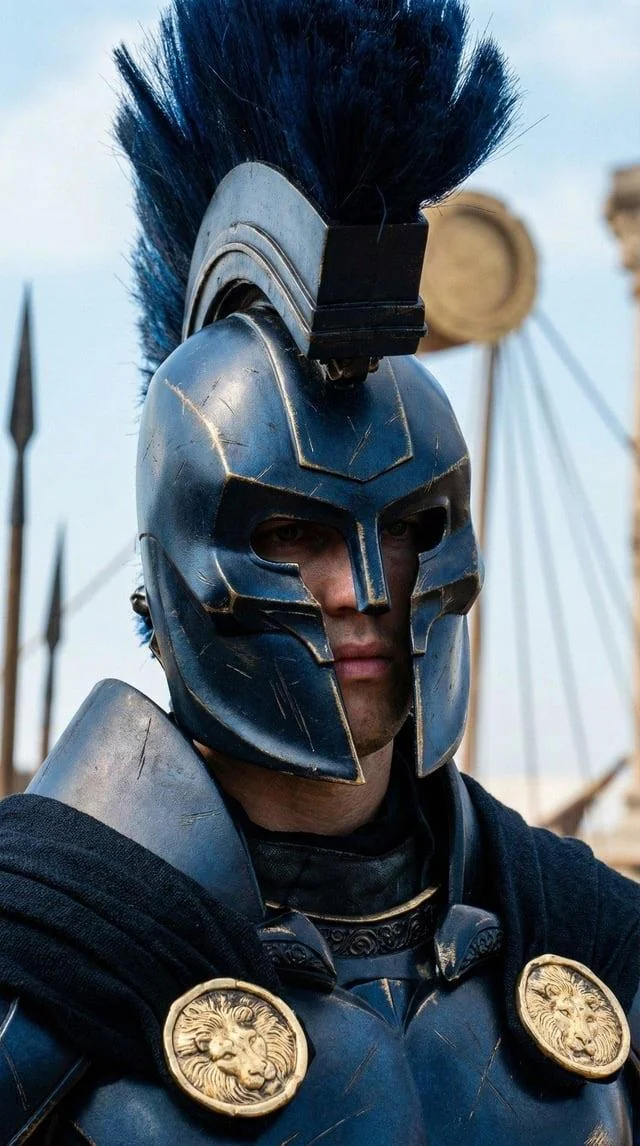
Bruce Wayne, is that you?!

I’m sincerely of the belief that films are not meant to be documentaries, but the storytelling and purpose of the adaptation has more to say about the moment and people in time in which the film was created. In that way, films are, in and of themselves, primary sources of the time period they are made in rather than purporting to be the historical artifact many critics wish for. Does it matter if the costumes aren’t period appropriate or if they used real-life Viking ships? When we consider movie-making effort, there are visual decisions that supersede accuracy. Doesn’t Agamemnon look like a foreboding and powerful figure without ever taking off his Batman-like helmet, similar to the screen presence of Darth Vader? And would it have been possible to stage all of the scenes on a Greek trireme nearly as well? What matters in a film such as this is the story that is being told to a modern audience and the overarching thesis. When that differs from the original it is not always a bad thing–it’s an interesting creative choice that attempts to connect with a modern-day understanding that intertwines with our past.

I’m not sure how any more clear Coppola could be

Troy (2004) faced similar backlash, but the concepts of national pride, fighting for one’s country, and the senselessness of war were a explicitly Bush-era notions rather than having any semblance of reality for ancient Greeks. Marie Antoinette (2006) was also heavily criticized for anachronisms while Coppola cheekily snuck in a pair of Converse shoes in the film, but those critics missed her intentional comparison of the opulent and destructive naivety of the 2000’s youth culture with a not-so-subtle nod to Hollywood royalty of the time like Paris Hilton.

So what is Christopher Nolan trying to tell us with his adaptation of the Odyssey, a story that’s been retold on film numerous times?

Odysseus is painted with less glory and cunning than his original counterpart, but this is nowhere near as offensive as Emily Wilson purports it to be. Nolan’s characterization stands alongside a pedigree of other faulty tragic heroes who contemplate a duty and the heavy weight of their own genius. Nolan’s Odysseus compares directly to Gotham’s Dark Knight, part of Odysseus’ struggle to protect and defend his crew despite their sins or whether or not they even deserve it paralleling Batman’s duty to his city. Odysseus is actively haunted by his mistakes throughout the film; like Oppenheimer, he experiences a sickening guilt around his ingenious idea of the Trojan Horse and despairs over the consequence portrayed in the film as a loss of Xenia (Zeus’ Law). Interstellar showcased a similar struggle to get home, with Cooper’s love for his daughter transcending space and time to get back to her, a loyalty to love mirrored by Penelope’s stubborn refusal to give up on her husband and Odysseus’ dog Argos living far beyond his years to see his master return. Odysseus belongs more to Nolan in the film than he does Homer, but again, this is not a bad thing.

The Odyssey also belongs to us.
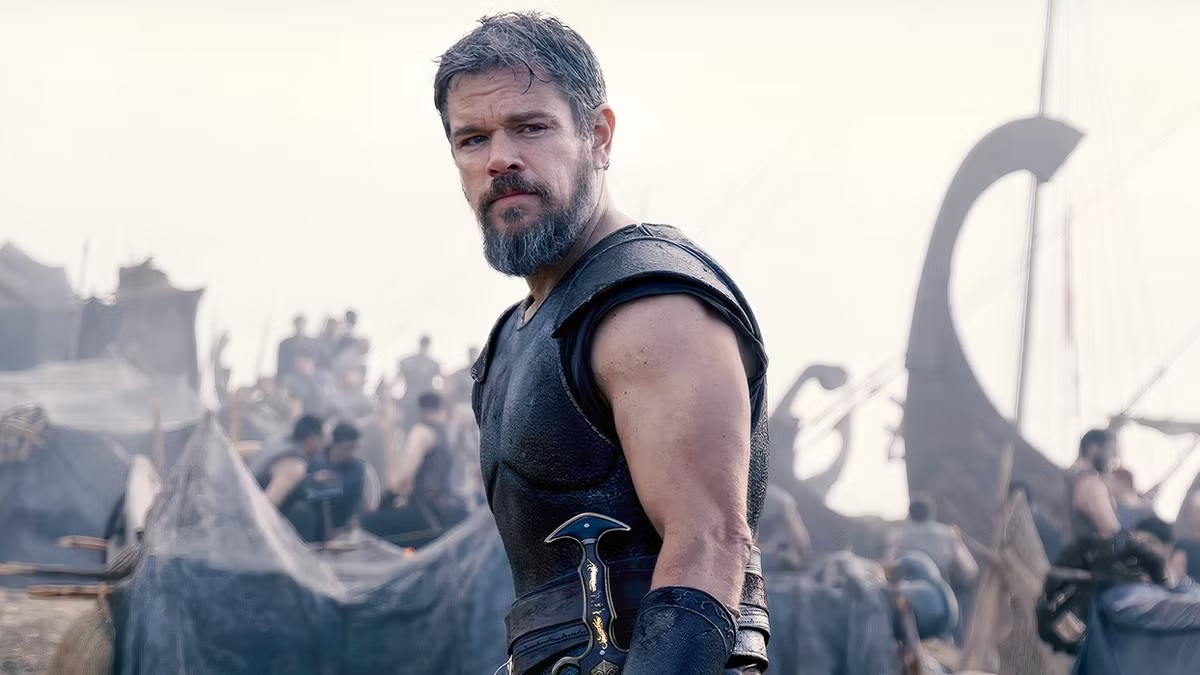
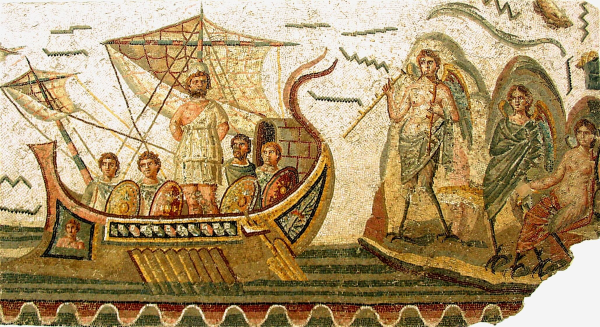
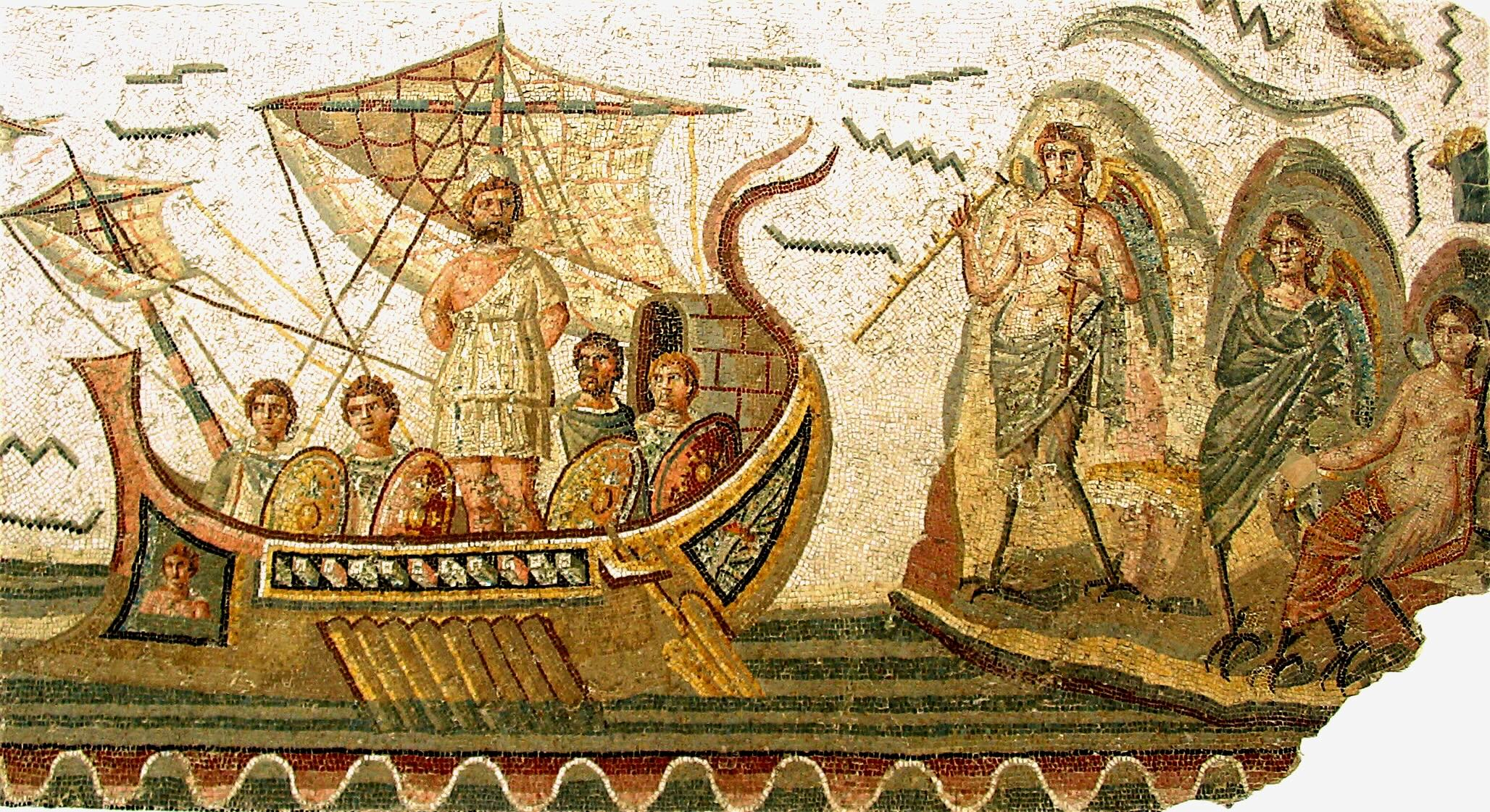
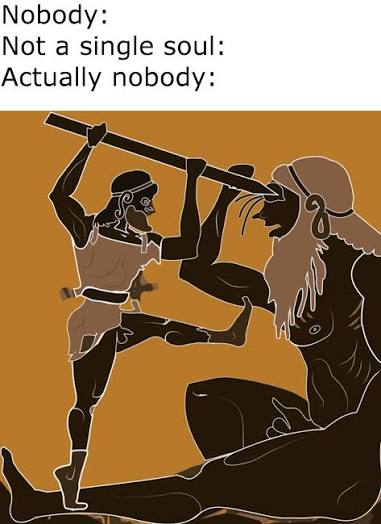
The culture of ancient Greece in which the story takes place would have put an exorbitant emphasis on the concept of Kleos or glory. In it, a person’s renown and reputation in the spoils of war overcame feelings of guilt or shame as portrayed in the film. Telemachus would have concerned himself more with whether or not his father died with honor than if he were alive at all. Let’s also not forget that one of Odysseus’ more deplorable acts in the original telling, having Hector’s baby son thrown from the walls of Troy, did not make it into the film because to a modern audience, this would have been an irredeemable act with no glory in it at all. Instead, people of today find honor in accountability, and there is a respect for men who do great things but have the insight to admit their wrongdoings. And though classicists may complain about the portrayal of a man ridden in guilt, we know as a modern people that Odysseus would have certainly experienced symptoms of PTSD (a diagnosis that didn’t become official until 1980), a narrative that makes sense to us and brings understanding to many of his choices in the film such as his avoidance of returning immediately home, unbridled aggression towards the Cyclops, haunting through flashbacks and the spectre of Athena, and pain in the Siren’s song.

In fact, as a modern audience, we care less about the trials and tribulations that marked Odysseus with glory in past retellings and more about whether he makes it home successfully to defend his son and wife from ravenous suitors. He saves his home and family, enacts revenge on those we’ve deemed deserving, and apologizes to the audience for his sins (a distinctly Christian idea). The overarching theme of the film also rests on the question, “At what cost?” Agamemnon sacrifices his daughter to win the Trojan war and ends up in the Underworld. Odysseus betrays Sinon and fails to defend a priestess from a barbaric beheading, violating sacred law. His crew kills and eats the cattle of Apollo and earn their deaths, Calypso tricks and keeps Odysseus for herself angering Zeus and preventing a husband and father from returning home, the Greeks eager for their victorious homecoming ransack and destroy much of Greece on their way, Penelope waits for Odysseus but her kingdom appears vulnerable and unmanaged without a king.

We ask ourselves this question now. At what cost do we continue to rage meangingless wars like the one in the Middle East? At what cost do we over-rely on AI as jobs dwindle, brains atrophy, and data centers siphon needless amounts of energy? At what cost are we losing our basic humanity as politicians continue to pit people against each other as they line their pockets while we’re too busy fighting to look? The movie demonstrates the consequence of blindly following a king into war over a lie with the sole purpose of enriching himself and then shows all the misery and destruction of civilization that follows. Seems a bit poignant, no?

“Nolan’s Odyssey lacks many of the elements that make the poem great. It has nothing convincing to say about time, memory, history, war, or about the relationship between one warrior’s glorious return and the lives of his family, adversaries, comrades, friends and neighbours. It lacks psychological, emotional, political and ethical depth. Its narrative structure is gimmicky. The writing is abysmal. None of the characters has convincing motivation for their actions or words. There are no sex scenes, and all the food looks horrible.”

Emily Wilson 2026

The Odyssey isn’t meant to be a faithful adaptation of the original, nor do we need it to be. Instead, the film stands as a testament to humanity and our ability to connect to a shared story from thousands and thousands of years ago, retold as many times and by various different authors over centuries, just like with Homer(s). Let us instead judge the film on its own merit, not whether it matches the interpretation of a single scholar.

From one history nerd to another, it’s okay. Sometimes being historically inaccurate is a more powerful message.


Nefertiti versus Nefertari

anne-baxter

Guess who I’m supposed to be…

Here at Histastrophe!, I make it a personal goal to arm my readers with random factoids they might have the pleasure of one day ‘Well, actually…” utilizing in everyday conversations to exert their historical dominance. Life is too short to go through in ignorance, after all. And while I’ve covered myths and misconceptions before, sometimes a common knowledge mix-up is nothing more than just a bit of confusion in differentiation. History certainly didn’t make it easy on us, especially with the insistence on naming all those damn kings Louis, for example.  Here’s looking a heavy side-eye at you, Kate & William

First up, two completely different famous Egyptian queens who ruled a Dynasty apart and have, unfortunately, similar monikers. Here’s how to tell the difference!

Continue reading

300: Rise of Artemisia

This is happening.

No one really expects a film based on a graphic novel based on a historical event to remain loyal to the latter. Source material taken from any form whose primary audience pounds out their vicious objections to any embellishments on a keyboard caked with Doritos residue and the sticky remains of a novelty energy drink, is going to be taken more seriously than a few scattered nerds nose deep in Herodotus’ The Histories. Mostly because the first group has the unique and senseless ability of lambasting anything they love to hate with enough down-votes across social media, even Mussolini would feel popular. So with the now swiftly approaching release date of Warner Bros’ 300: Rise of an Empire, I doubt anyone is supremely concerned with historical accuracy. I’m guessing the main discussion sparks with a critique of slow-mo, how realistic and plentiful painted abdomens will be, and a nostalgic exchange of celebratory memes.

Yield at ‘Madness’

But if there is one thing I really do hope, nay, EXPECT, the movie to get right, is the characterization of Artemisia.

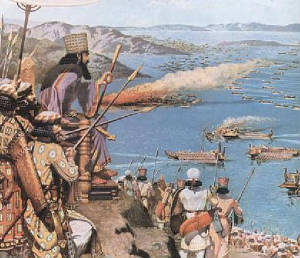
For a film promising to portray itself in an epic scope and deliver on all that delicious violence and bloodshed, there really isn’t an absence of it in the source material. And when it comes to Artemisia, no one, not even thousands-of-years-dead historians, can deny that she was a sassy man-trouncing Mutha’Amourous Congresswoman‘.

Artemisia was queen of the Persian providence of Caria, which she gained because her son was still a noob-fledgling after her husband died. Clearly, nobody gave a shit about him though because I never came across a name for the father, or even the son for that matter, in my readings. And who the hell would when Artemisia was bringin’ the feminism as the only female naval commander in a time period when women were expected to cover themselves to protect their chastity. (Apparently, Cyrus the Great’s influence…clearly not in relation to Miley Cyrus as she believes in neither of those things)

Her story predominately begins with the various re-tellings of the Greco-Persian wars, which for the folks who are here because of 300, are the collection of battles between Persia and the city-states of the Greek world. Not much is really known about Artemisia’s life beyond what battles she contributed her skill in and Herodotus offers little insight beyond an awe of confusion over her presence at all given this text:

There is no need for me to mention all the other subordinate officers, but there is one name which I cannot omit—that of Artemisia. It seems to me a marvel that she—a woman—should have taken part in the campaign against Greece.

But since he was Greek, there’s really no surprise there. Actually, I would infer that because Herodotus himself was born in Halicarnassus of Caria, then under the rule of Artemisia’s grandson continuing a somewhat familial regional legacy, he would find her loyalty surprising given his own rather than in full part because of any misplaced view on women. Clearly, he did have some respect for her, referring to her reasons for joining under Xerxe’s command as

there was consequently no necessity for her to do so. Her own spirit of adventure and manly courage were her only incentives.

But that probably has to do with the common association of comparing her accomplishments to that of a man and not a woman, which I will show more of in a bit. Either way, despite her gender, she was well known for her wisdom and intelligence, being one of Xerxes’ most promising advisers. Right before the (SPOILER ALERT: “ill-fated”) Battle of Salamis, Xerxes sent his lead military commander Mardonius [Remember this quote, guys?] to each one of his fellow commanders to retrieve their advice for the king on their opinion about raging a sea battle against the Greeks. Every single one of them, save for Artemisia, was in favor of engaging in the tactlessly arrogant attack. Without missing a beat or sparing offense, she is said to have replied with these ‘kind’ words;

Mardonius, tell the king for me that this is the answer I give—I, whose courage and achievements in the battles at Euboea were surpassed by none: say to him, “Master, my past services give me the right to advise you now upon the course which I believe to be most to your advantage. It is this: spare your ships and do not fight at sea, for the Greeks are as far superior to your men in naval matters as men are to women. In any case, what pressing need have you to risk further actions at sea? Have you not taken Athens, the main objective of the war? Is not the rest of Greece in your power? There is no one now to resist you—those who did resist have fared as they deserved. Let me tell you how I think things will now go with the enemy; if only you are not in too great a hurry to fight at sea—if you keep the fleet on the coast where it now is—then, whether you stay here or advance into the Peloponnese, you will easily accomplish your purpose. The Greeks will not be able to hold out against you for long; you will soon cause their forces to disperse—they will soon break up and go home. I hear they have no supplies in the island where they now are; and the Peloponnesian contingents, at least, are not likely to be very easy in their minds if you march with the army towards their country—they will hardly care to fight in defense of Athens.
If, on the other had, you rush into a naval action, my fear is that the defeat of your fleet may involve the army too. And put away in your heart on other point, my lord, to be considered: good masters, remember, usually have bad servants, and bad masters good ones. You, then, being the best master in the world, are ill served: these people who are supposed to be your allies—these Egyptians, Cyprians, Cilicians, Pamphylians—are a useless lot!

The rest of the commanders held their breath, sucked in their retorts if they were included in the closing insult, or waited eagerly for Xerxes to put her silly inferior brain in place. Too bad for them though, that Xerxes, who usually has such sound judgments more in line with their intellectual capacity, greeted Artemisia’s opinion with the most highest of esteem, in fact notably encouraging her with more favor for giving such an admirable and sound advising. However, though pleased with Artemisia’s skepticism, Xerxes’ astronomically amorphous ego was certain that his presence alone would foster victory where it had since lacked. And so the Battle of Salamis was soon underway.

"WHY ISN'T MY FACE MAKING THEM WIN?!"

“WHY ISN’T MY FACE MAKING THEM WIN?!”

So, presumably not all that begrudging given her affection for baddassery, Artemisia sailed into battle regardless. According to Polyaenus (A Macedonian author who dedicated one of his works to Marcus Aurelius *bravo*), in battle, Artemisia’s long ship carried different flags, Greek, Barbarian, etc. which she would fly intermittently given her chosen enemy, the ability to sneak attack unawares. She used this technique in full when, after her comrades and allies fell apart in abstract chaos in the wake of their combined utter defeat, she found herself being chased by an Athenian Trireme with no chance of escape as she was completely surrounded by enemy and friendly ships alike. Throwing up the colors and ramming a friendly ship captained by the king of Calynda, Damasithymus, she made herself appear an ally, which led the Athenian Trireme to give up the chase and let her free. It is said too that, technically, Artemisia killed two pigs with one stone in that single maneuver, as apparently, she and Damasithymus quarreled earlier during the campaign and he was now…well, sunk and dead. Herodotus couldn’t fully comment whether there was malice in her intent. But you know what they say about a woman scorned…

Artemisia’s act of ingenious revenge was witnessed by Xerxes and his camp of overlookers forcing him (and Herodotus) to fall more deeply in love respect for her than ever before. Because that was freaking awesome. Xerxes famously saying:

My men have turned into women and my women into men.

And since Artemisia was the only woman in that battle, we all know what he really meant. You go, girl.

After the crushing defeat, Xerxes wondered out loud, again, what he should do next. And despite Mardonius’ insistence to continue an invasion of Greece and the Peloponnese, Xerxes’ was eager to follow Artemisia’s advice. Which, after calling Mardonius a slave a few times for good measure, convinced the King to return home to safety which he was more than happy to oblige. He sent Mardonius off to battle (and further failure) and Artemisia with compliments and his sons to Ephesus.

And so concludes the exploits of Artemisia. Living on in name for an Iranian destroyer and as one of the titular characters in a Hollywood blockbuster movie.

Primary Sources:

The Histories, Herodotus. Book VII-VIII. 68-9; 87-8; 101-3.

Stratagems of War, Polyaenus. Book VIII, 53.3.

Secondary Source:

Mackey, Sandra & Harrop, Scott (1996). The Iranians: Persia, Islam and the Soul of a Nation.