Those Saucy Romans

Garum sauce

If you thought putting anchovies on pizza was gross, brace yourself for this next post. The Roman Empire, being a wretched hive of scum and villainy for about the entirety of it’s hellion reign across most of Europe, wasn’t exactly shy about being off the wall crazy about some of its more questionable pleasures. From painting lavish dick pics everywhere to delighting in some healthy disembowelment in the gladiatorial arena, not much of these practices would be accepted in modern day society. Well, okay, except for maybe the first one.

One of the things the Romans were famously into, was soaking their food up in a sauce known as “Garum” or “Liquamen” which we’ve found archaeological evidence of in manufacturing, residue in pottery, and depicted in art and writing of the time. The sauce knew no societal bounds, common among people of all different classes and religions (evidence of a kosher option even exists) [1 & 3]. So, basically sounds like the Roman version of ketchup. How bad could it be?

Another liquid, too, of a very exquisite nature, is that known as “garuim:” it is prepared from the intestines of fish and various parts which would otherwise be thrown away, macerated in salt; so that it is, in fact, the result of their putrefaction. – Pliny the Elder, The Natural History [2]

Makes me want to hurl harder than a highlander tossing a log across long distances to impress his skirt wearing friends.

But was it really all that bad? Obviously, it was incredibly popular and how far removed would our taste buds really be from our Classical ancestors? Are we really any different, slathering our sushi rolls with eel sauce?

Evidently, garum was probably similar to popular fish sauces found in Vietnamese, Indochinese, and Turkish cuisine today. And based on our sources and the ancient recipe we’ve discovered concerning its production (A salt to fish ratio of 1:8), “the amount of salt used in the production process inhibited putrefaction and, hence, prevented any rancid smells. Bacterial fermentation, similar to that found in the production of cheeses, induced maturation of the product.” [3] Pliny claimed that the sauce itself smelled a bit funky, but what decent cheese doesn’t? And let’s not forget that even if it had a strong ode de parfum, he still called it exquisite. [2]

Garum party

What life was like for the Romans before the invention of Nutella

Probably seems strange that such a popular and maybe not all that gross sauce would just disappear then. But apparently, the sauce itself was fairly expensive, even some higher quality versions near the end of the Roman Empire’s life span would cost about $500 of today’s moolah. [3 & 4] It’s always baffling to me how unperturbed we are to have table salt readily available in a cupboard or at a restaurant, but it used to be a precious commodity that was heavily taxed and fought over. With a salt tax introduced among the empire, garum production became a bit too expensive since it was the necessary component that made it deliciously putridy. And with the collapse of power in the western half of the Roman Empire in the 5th century, the ownership of the Mediterranean seas became an indisputable playground for some good old fashioned piracy. [4]

If you’re not turned off by the process and are still curious how it tasted, however, you’re in luck! It’s starting to make a comeback.

Do you not realize that garum sociorum, that expensive bloody mass of decayed fish, consumes the stomach with its salted putrefaction?

— Seneca, Epistle 95. [5]
Fact Check it, yo!
[1] LEARY, T. (1994). JEWS, FISH, FOOD LAWS AND THE ELDER PLINY. Acta Classica, 37, 111-114. Retrieved from http://www.jstor.org/stable/24594356
[2] Pliny the Elder, The Natural History. John Bostock, M.D., F.R.S. H.T. Riley, Esq., B.A. London. Taylor and Francis, Red Lion Court, Fleet Street. 1855.
[3] Curtis, R. (1983). In Defense of Garum. The Classical Journal,78(3), 232-240. Retrieved from http://www.jstor.org/stable/3297180
[4] Prichep, D. (2013, October 26). Fish Sauce: An Ancient Roman Condiment Rises Again. Retrieved March 20, 2018, from https://www.npr.org/sections/thesalt/2013/10/26/240237774/fish-sauce-an-ancient-roman-condiment-rises-again

Some Men Just Want to Watch the World Wonders Burn

Louise Belcher Evil Laugh GIF by Bob's Burgers

Eye-witness video of Herostratus circa 4th century BC.

People suck. I’m confident that this is a definitive statement I can make without stating any evidence or backing citations since we’re all constantly exposed to the same examples in our day to day lives that proves it, from mass murderers on the news to that dude in a pick-up truck who cut you off on the road earlier this week.

And while there might be some cases where our modern world may be to blame, I can assure you that since civilization has been a thing, people have been finding all kinds of ways to be various levels of bastards to one another. And perhaps the most disrespectful and shitty thing you could possibly do to everyone is destroying one of the Seven Wonders of the Ancient World just for the helluva it.

Enter Herostratus, whose name I’m annoyed to even know.

Therefore only an utterly senseless person can fail to know that our characters are the result of our conduct.Aristotle, The Nicomachean Ethics; Book III [1]

In 4th century BC, Ancient Greece was still very much a playground for heroic mythos celebrated as true accounts, from the rippling pectorals of Heracles to Achilles’ famous anger, despite how much Plato wanted to ruin the fun for everyone by telling them otherwise. So, it’s perhaps understandable that a desire to cement oneself in these cool new things called “History Books” was a real thing people worried about. I mean, an entire cult of worship amassing after your death and obsessively placing pottery in your name everywhere does sound kind of nice. The only trouble is, how does one accomplish such a magnificent feat without being either a King, really good at wearing a toga and going around harassing the youth with your incessant “why” questions, or immortalizing yourself in a war when everyone was too busy inventing things and getting ready for the arrival of the next big thing since fermented grapes?

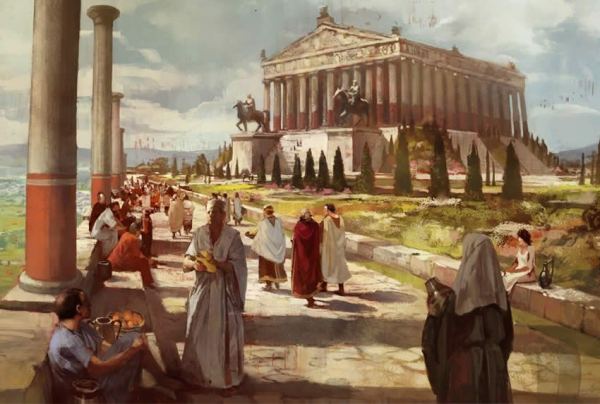
And perhaps it was out of a subconscious resentment for this last one in particular, Herostratus decided that being remembered in infamy was good enough for him and that to accomplish this, he would set fire to The Temple of Artemis in Ephesus on the day of Alexander the Great’s birth on July 21st, 356 BC. [2]

A man was found to plan the burning of the temple of Ephesian Diana so that through the destruction of this most beautiful building his name might be spread through the whole world. –  Valerius Maximus (VIII.14.5) [2]


The people of Ephesus were not having any of this bullshit. Capturing Herostratus, torturing his ass until he admitted to his stupid reason for torching the only thing that put their city on the map, and executing the shit out of him, they also decreed it a capital offense to even mention his name, effectively inventing the phrase He-Who-Must-Not-Be-Named in an attempt to show everyone that pulling stuff like this would get you nowhere in history, god dammit.

Artemis Temple Illustration

Cry emoji

Unfortunately, his name still managed to survive and we know it today because those pesky ancient historians like Theopompus and Strabo [3] just couldn’t help themselves. Now we all get to hate ourselves for knowing it and, effectively, making sure that Herostratus came out of this whole ordeal as the winner.

You’re welcome.

Fact Check it, yo!

[1] Aristotle, The Nicomachean Ethics; Book III. Retrieved: http://classics.mit.edu/Aristotle/nicomachaen.3.iii.html

[2] Valerius Maximus, Factorum et Dictorum Memorabilium; (VIII.14.5) Retrieved (Also Google Translate): http://penelope.uchicago.edu/Thayer/L/Roman/Texts/Valerius_Maximus/8*.html#14.ext.5

[3] Smith, William, A Dictionary of Greek and Roman biography and mythology. Retrieved: http://www.perseus.tufts.edu/hopper/text?doc=Perseus%3Atext%3A1999.04.0104%3Aalphabetic+letter%3DH%3Aentry+group%3D11%3Aentry%3Dherostratus-bio-2

The Nose Goes: When Octavian Meets Alexander the Great

AlexandertheMug

What a great nose, would be a shame to lose it…

It starts like any whimsical joke, so Octavian meets Alexander the Great. And, naturally, the end of it is marked with a well-placed punch. Not least of all, the humor in it accented by the fact that Alexander is, well, super dead.

To bring us back to this moment in time, Octavian who is soon to be remembered in history as Augustus Caesar, had just conquered Egypt. It was late summer of 30 BC, and with Mark Antony pooling in his deathbed from the fatal piercing of his own sword and Cleopatra having succumbed to an agonizing eternal slumber with the aid of poison (Whether it was administered by an asp remains a matter of debate [1]), there was no one left to stand in the way of Octavian and the spoils he was eager to enjoy of the once great Ptolemaic Kingdom that had ruled Egypt for the last 300 years. Perhaps the most cherished treasure of the city of Alexandria remained the tomb of its namesake and the most famous conqueror the world had ever witnessed, that of Alexander the Great. And, like his uncle before him who had strode in the presence of greatness at the behest of Cleopatra herself, Octavian too was avid to bear witness to the last man who, under the fierce gallop of his horse Bucephalus, had carved out and drastically changed the world. In hindsight, Octavian was perhaps also ignorant to the fact that he was about to be remembered for doing the same.

As the legend goes, after Alexander succumbed to illness (Because we have yet to find his body, all matter of possibilities have been suggested by scholars from poisoning, malaria, and even bowel perforation to being the cause of death) his body was encased in a golden sarcophagus filled with honey because why not also make him famously delicious and sent on its way to his homeland of Macedon despite his apparent wishes to be buried in the Egyptian oasis Siwah, thrown into a river as to attest to his godliness without evidence of a body, or be burned to ashes because then people couldn’t do exactly all of the things they eventually did to his corpse. [2] Unfortunately, one of Alexander’s generals and heirs, Ptolemy I, hijacked the procession and smuggled the body to Memphis in Egypt which he then began to rule after Alexander’s passing. From there, it remained in Ptolemaic possession, passing from Memphis to its famous resting place in Alexandria with a later Ptolemaic king swapping the golden sarcophagus with a glass one for a more economical viewing experience.

It was this resting place, now housed within the Soma Mausoleum, that Octavian wished to pay his respects.

Augustus-before-the-Tomb-of-Alexander

Sebastien Bourdon, Augustus before the Tomb of Alexander

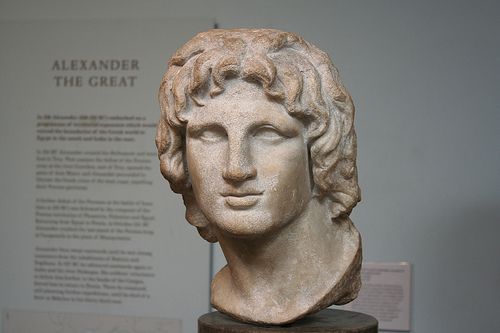
According to Suetonius, Octavian wished to gaze upon the body of Alexander the Great and show his respect by placing a golden crown upon his head. [3] Whether it was in placing the diadem or in the act of kissing the forehead of his idol, Octavian somehow managed to take off the nose of the greatest man to have walked the Earth, accidentally crushing it in the process of fealty. Whoops! [4]

“My wish was to see a king, not corpses.” – Octavian in response to being asked if he would like to see the tomb of the now vanquished Ptolemies in the most brutal clap-back ever recorded. Suetonius, The Life of Augustus para. 149

A part of me hopes that the irony of this event was not lost on Octavian. For the act of breaking the legacy of Alexander the Great lay with the destruction of Cleopatra’s kingdom and now, symbolically, with his nose. And it was from this moment on, really, that Octavian emerges as the next most famous conqueror in history, becoming the first and most powerful Roman Emperor to ever live.

As for what remained of Alexander, his body continued to fall victim to the whims and folly of other Roman Emperors. His tomb was looted by Caligula (You’d think he’d show some respect for a fellow equestrian, right?) and was tampered with by Caracalla (who delights in a good piss off, amirite?) after Septimius Severus tried sealing the tomb. [5] From there, no one really knows what became of Alexander the Great, whether his body was removed by a pesky Roman Emperor when stealing relics wasn’t enough or perhaps, engulfed into the sea with the rest of ancient Alexandria after a series of fatal earthquakes. Either way, amidst natural disasters and frequent sacking by other conquerors, the location of his tomb was eventually lost, waiting for the day when archaeologists and historians are hopefully able to recover it.

But one thing is for certain, the nose went first.


Fact Check it, yo!

[1] Cleopatra’s Death. (n.d.). Retrieved March 14, 2018, from http://penelope.uchicago.edu/~grout/encyclopaedia_romana/miscellanea/cleopatra/rixens.html

[2  Arrian. The Anabis of Alexander. Book VII Retrieved March 14, 2018, from https://archive.org/stream/cu31924026460752/cu31924026460752_djvu.txt

[3] Suetonius. The Life of Augustus. Retrieved March 14, 2018, from http://penelope.uchicago.edu/Thayer/E/Roman/Texts/Suetonius/12Caesars/Augustus*.html

[4] , Anthony Everitt. (2006) The Life of Rome’s First Emperor. 

[5] Lindsay, I. (2014). The history of loot and stolen art: from antiquity until the present day. London: Unicorn Press Ltd.

King Slayers – Emperor Caracalla and the Case of the Full Bladder

Emperor Caracalla

Seriously, bruh? Couldn’t wait until I was finished?!


Emperor Caracalla falls among a long line of dickish Roman Emperors who, if anyone recalls his name at all, will be forever remembered in infamy for good ol’ fashioned tyranny and the pathetic way in which he met his end.

But this same emperor made many mistakes because of the obstinacy with which he clung to his own opinions; for he wished not only to know everything but to be the only one to know anything, and he desired not only to have all power but to be the only one to have power. Hench he asked no one’s advice and was jealous of those who had any useful knowledge. He never loved anyone, but he hated all who excelled in anything, most of all those whom he pretended to love most; and he destroyed many of them in one way or another. [1]

-Cassisus Dio. On Caracalla but without the context, could easily be confused for a different modern leader of today.

Following the reign of his father Septimius Severus, the dude who JK Rowling probably named Snape after, Caracalla began a joint rule with his brother Geta in 211 AD until he had him murdered because he just didn’t like to share or settle differences in a reasonable manner because what Roman Emperor needs to possess sound judgment? But even before this moment, Caracalla had already started his laundry list of assholery that began with the exile and murder of his wife, whom sources aren’t entirely sure why he hated so much (and keep in mind divorce in Rome at this time was quite common), and her father for being responsible for half of her gene pool. [2] To make matters worse, after Caracalla had his younger brother gutted in the arms of their own mother, he went on to order a damnatio memoriae which attempted to erase his name and memory from public record and history. Anyone who had a problem with the murder or even spoke Geta’s name out loud was rounded up and murdered. All in all, an estimated 20,000 people were killed over an affair that could have probably been solved with a nice family chat over wine. [3] So clearly, Caracalla was a fun guy to be around.

When the Egyptian population was touched by Caracalla’s heavy handed politics, they rebelled by their sense of humor of making Caracalla the object of their satire. Jokes and puns were devised on his account, to which Caracalla was not a ready audience… [3]

Robert Morgan, History of the Coptic Orthodox People and the Church of Egypt.

(In response, Caracalla tricked the City of Alexandria into a display of extended respect by promising to pick from the city’s youth to back fill the employ of his legions. When the candidates had eagerly gathered to await their choosing, Caracalla ordered his soldiers to slaughter the entire crowd.)

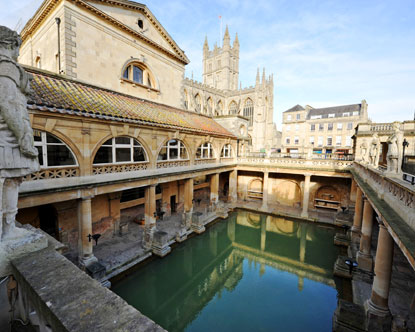
Baths of Caracalla

I wonder how many people peed in these.

Not everything he did was entirely shitty, however. He built baths in Rome which are essentially the ancient equivalent of a YMCA, paid his military handsomely, and issued the edict of Constitutio Antoniniana which gave all freed men living in the borders of the empire Roman citizenship. [4] There were some exceptions of course, but this was a big deal because at this time Rome was at the height of its expanse, with only a small percentage of the population enjoying all of the benefits of being a true Roman, which included protection from being crucified as capital punishment.


Roman Empire 117AD

This is only one hundred years before Caracalla. That’s a whole lot of taxes.

But like all things in Carcalla’s life, when he was spurned, his immediate response was to kill things. So when he offered a marriage alliance between himself and the daughter of a Parthian king in an attempt to gain more territory for Rome but was rejected, he responded by launching a military campaign to take it by force with bloodshed. [1]

It was on one of these campaigns when Caracalla couldn’t resist the urge to urinate. Stopping off the side of the road to relieve himself, a disgruntled soldier unhappy by his lack of promotion approached him unnoticed. Apparently not even giving the emperor a chance to finish, the soldier stabbed Caracalla in the back shoulder until he fell dead, but hopefully not on his newly relinquished stream. [5]

Cause of Death: Inopportune bathroom break


Fact Check it, yo!


[1] Cassius Dio, Roman History; Epitome of Book LXVIII. Via URL: http://penelope.uchicago.edu/Thayer/E/Roman/Texts/Cassius_Dio/78*.html

[2] Dorothy King’s PhDiva. (n.d.). Retrieved January 05, 2018, from http://phdiva.blogspot.com/2011/11/damnatio-memoriae-geta.html

[3] MORGAN, R. (2016). HISTORY OF THE COPTIC ORTHODOX PEOPLE AND THE CHURCH OF EGYPT. S.l.: FRIESENPRESS. URL: Google Books

[4] Benario, H. (1954). The Dediticii of the Constitutio Antoniniana. Transactions and Proceedings of the American Philological Association, 85, 188-196. URL: https://www.jstor.org/stable/283475?seq=1#page_scan_tab_contents

[5] Herodian, History of the Roman Emperor Since the Death of Marcus Aurelius; Murder of Caracalla. Via URL: http://www.livius.org/sources/content/herodian-s-roman-history/herodian-4.13/?

History is Incessantly Incesty (Part Uno)

pojo2hu

A Song of Fire & Ice or shameless familial “bonding”

I, like 16.5 million viewers last Sunday, watched the Game of Thrones season 7 finale with bated breath. With only 6 episodes left of the entire show, a series which was born from books that are taking about as quickly to write as The York Minister Cathedral was to build, the story is furiously spiraling to its inevitable conclusions. One of which happens to be the fate of a couple I’ve personally been rooting for since Book 1 when it made little sense geographically or personally, nor does it seem likely ideal in light of recent revelations…

But what do I care? In defense of myself, I’m here to point out a few instances in history where things got a bit too close for comfort, if you know what I mean. And perhaps by contrast, make the Dragon and Wolf look guiltlessly desirable in comparison. Lord of Light, have mercy on my internet search history…

1. Lucrezia & Cesare Borgia (And maybe Pope Alexander VI)

Lucrezia_Cesare Borgia

Unlike Showtime and Victor Hugo, I personally don’t ascribe to the belief that this Renaissance Brother & Sister Power Duo were secretly boning. But, alas, contemporaries of their time assumed they might be. After-all, the family of Pope Alexander VI stood accused of liberal poisonings and murders, thievery, buying and selling church offices, adultery and rampant orgies among the papacy, fratricide, and general douche-baggery aimed toward the Papal States–was there no limit to bounds The House of Borgia knew? [6]

Late in the 15th century, when Rodrigo Borgia became Pope Alexander VI in no small part to bribery (presumably) and the assistance of rival Cardinal Sforza who was said to have personally taken a large payoff himself, Lucrezia Borgia suddenly became the most eligible, illegitimate 12-year old daughter in Italy. As a reward for his support, Cardinal Sforza saw Lucrezia married off to his nephew, Giovanni Sforza the then Duke of Milan, to solidify the alliance between the two families. This went about as well as a dinner date between the Hatfields & McCoys, and soon Pope Alexander VI was calling for an annulment while Cardinal Sforza’s other ally –just the King of France, Charles VIII, no big deal — appeared parading through Italy with the door held wide open for him to invade the papal territories. Giovanni was accused of having neglected to consummate the marriage, which incensed, caused him to lob the nefarious accusation at the Borgia family that the true reason the papacy was asking for the divorce was because Lucrezia was busy fornicating with her father and brother, a somewhat less humiliating prospect for the Duke to stomach apparently. With the promise of keeping the dowry intact for Giovanni, the marriage was soon dissolved but not so for the rumors. [1]

“It is said that Mr. Giovanni Sforza did this because the Duke used with his sister, his wife, the puppet of the pope, but of another mother” – Malipiero Letter 1497 [5

The Borgias had not yet given up on Lucrezia’s worth as a bargaining chip, and so paired her off with Alfonso of Aragon, a bastard of Naples, in the hopes of laying the ground work for Cesare Borgia to marry the daughter of the King of Naples and inherit the throne as well as another ally against Charles VIII who was still busy trouncing through doors a bit willy-nilly around Italy. Still a teenager, Lucrezia managed a hot second of a peaceful marriage before, again, her scheming brother and father (who were totally plausible lovers…of her misfortune, clearly) decided, you know what, Charles VIII just loves walking through doors and things, really good at it actually, the best–we might as well be friends and marry Cesare off to his daughter instead. Naturally, the Kingdom of Naples was a bit pissy about this new frenemy and The Borgias added another noble house of Italy to their shitlist. [2]

“Thus, Lucretia, Sextus always wants to make love to you? O fate with a horrible name! This Sextus is your father.” Epigram by Jacopo Sannazaro Italian poet (1457 – 1530) [4]

On the wrong-side of another family dispute, 18-year old Lucrezia tried to navigate her way through another marriage doomed to fail when her Neapolitan hubby was ambushed on the steps of St. Peter’s Basilica by henchmen wielding a few knives, no doubt causing her to cry out “Et Tu, Pater?”. Alfonso managed to survive for the time being, held up under the “reliable” care of the papacy while propaganda papered the streets of Naples supposing that Cesare had made the idle threat “What didn’t happen at lunch may still happen at dinner.” like this was some pilot season episode of The Sopranos. Unsurprisingly, Alfonso turned up in bed strangled one morning. Perhaps by a jealous lover brother reasoned the gossip. Lucrezia, having really no energy left to deal with the mess her life had become at the hands of her family, went into mourning. [1]

Unfortunately, if there was one thing a noble Renaissance woman was good for other than posing for paintings, it was getting hitched– and that’s precisely what the Borgia brood were plotting to do again. This time their ambitions were with the duchy of Ferrara (And no, not for Lemonheads, that candy company is an American one) and Lucrezia was soon married off to Alfonso D’Este, another alliance Charles VIII would surely adore. Ultimately, this one worked out for Lucrezia and she was able to spend the rest of her days in Northern Italy cherished by her subjects. Not a year later, her father Pope Alexander VI collapsed of illness (or poisoning, eh it was the Renaissance after-all), sending the papacy into the awaiting hands of Borgia enemies and her brother Cesare, infamous as a subject of Niccolò Machiavelli’s The Prince, aesthetic model for portraiture of Jesus Christ, and number one suspect in the Tiber river murder of his brother Giovanni or “Juan” [7], died only a few years later.

It seemed almost as if Lucrezia would be fortunate enough to finally escape the sins and rumored exploits of her family, but after her death in 1519 after a troubled childbirth, the gossip again rose to a feverish pitch with little to no one left to denounce them.

“Here rests Lucrezia by name, who in reality was a Thais, the daughter, wife & daughter-in-law of Alexander.” – Epitaph written by Jaccopo Sannazaro, who wasn’t yet done slandering Lucrezia. [1]

Why did the rumors persist? Alexander’s papacy wasn’t exactly the first of its kind to churn out questionable practices nor a squeaky clean image, but perhaps the answer lies with the sheer amount of enemies The Borgia managed to collect over their years clamoring for power. Among the families already listed, they also managed to incite the animosity of the legendary House of Medici who ran Florence, the Orsini family, the Colonna house which churned out a libelous diary from Stefano Infessura who gleefully chronicled Lucrezia’s rumored licentiousness, and Pope Julius II. Before becoming pope, Julius II spent his time hating Alexander VI and worked to undermine and, if possible, unseat him. When he wasn’t trolling Michelangelo, Julius II used his papacy to try and mop up remaining Borgia territory all while torturing a Cesare Borgia loyalist for any amusing gossip he could gleefully spread about his enemies. [2]

“For the thing was known far and wide, and because my informants were not Romans merely, but were the Italian people, therefore have I mentioned it.”

-Matarazzo of Perugia, who relates the accusation of papal orgies by Pope Alexander VI with the inclusion of his daughter Lucrezia as well-known fact because it was ‘common’ gossip. [5]

As for the fate of King Charles VIII of France who featured so prevalently in the torrid politics of Lucrezia’s numerous marriages? Killed by a door. I’m not even kidding. [3]

hodor4

(To be Continued…Part 2)

Fact check it, yo!

[1] Hibbert, C. (2009). The Borgias and their enemies. London: Constable.

[2] Meyer, G. J. (2014). The Borgias: The Hidden History. Random House Inc.

[3] Markatos K., Karamanou M., Arkoudi K., Konstantinidi A., Androutsos G., A Cranial Trauma was the Cause of Death of Charles VIII of France (1470–1498), World Neurosurgery, Volume 105, 2017, Pages 745-748

[4] Fantazzi, C. (2011). Susanna de Beer, Karl A. E. Enenkel, and David Rijser, eds.The Neo-Latin Epigram: A Learned and Witty Genre. Supplementa Humanistica Lovaniensia 25. Leuven: Leuven University Press, 2009

[5] Gregorovius F., Lucretia Borgia: According to Original Documents & Correspondence of Her Day.

Primaries;

[6] Diario della citta di RomaStefano Infessura (Notoriously biased & unreliable, as are the rumors)

[7] “But I understood, as the Duke of Candia died for the death of his brother, Cardinal.” Pigna dispatch Ercole, Venice Feb 22nd, 1498

The Killing Joke

chrysippus

Stoic AF

There are many bizarre deaths in Classical antiquity and, with a people that guzzled wine like water [1], it shouldn’t be all that surprising. There was Emperor Caracalla who decided to take a pee break off the side of a road and was stabbed mid-stream [2].  Philosopher Empedocles who hurled himself into a volcano thinking he’d survive it and become a god because that sounds legit [3]. Or rich bastard Roman General Crassus who forced down molten gold because he lost a battle with the Parthians and irony [4]. There was even Saint Lawrence who earned his martyrdom by sass for quipping “Turn me over–I’m done on this side!” [5] while being cooked up on a giant grill to be served during a persecution of Christians BBQ. But speaking of jokes, my favorite has to be the tale of Chrysippus, whose death you probably just had to be there to get.

Backing up a little bit, let’s lay the foundation for this set-up. Chrysippus was a famous Greek philosopher who was tearing up the streets of Athens a few hundred years after Socrates daintily sipped an aromatic cup of freshly brewed hemlock tea. He was a stoic, the guys confused in modern days with sociopathy and Commander Spock, but taught his students about the aether of the Universe and living a life in congruence with the will of Fate and aligning oneself with Nature. So more like a Jedi rather than someone who refuses to smile at puppies. He also tinkered around with math, created prepositional logic, and started some early ancient therapy sessions hoping to assist folks with unruly passions. Chrysippus was kind of a big deal, logical in thinking and focused entirely on formulating an impressive philosophical rapt sheet. So let’s fast-forward to a now 73 year-old man with this impressive a career to behold.

Invited by his pupils to a sacrificial feast which, in those days, was probably akin to a professor attending a wild on-campus keg party, Chrysippus downed copious amounts of wine as one is want to do. It was noted by Diogenes Laertius, a Classical biographer of the Greek philosophers, that this particular wine was undiluted–no water, just pure sweet straight up wine which was sure to get even the most stoic philosopher congruently drunk in accordance with Nature. Stumbling around in the throes of intoxication, Chrysippus was giddy in delight when a donkey escorted by an old woman happened by him and immediately started to consume the remaining figs Chrysippus must have been carrying around from the party. [6]

Struck with the genius of his own cleverness, Chrysippus seized upon the moment to hurl the greatest joke to which would ever be uttered in the history of hilarity:

Now give the ass a drink of pure wine to wash down the figs! [6]

Howling with laughter, Chrysippus was beside himself with his own joke, the old woman we can only assume, struggling to find the humor at all in this line. Delirious and overtaken with his own comedic timing, Chrysippus fell into such a violent fit of hysterical giggles about the prospect of giving a donkey wine or something, I don’t know, I don’t get you Chrysippus, that he promptly died on the spot–in the wake of his own comedy. [6]

The dude literally died laughing at his own joke.

And it wasn’t even that funny.

Fact Check it, yo!

[1] Wine and Rome. (n.d.). Retrieved April 25, 2017, from http://penelope.uchicago.edu/~grout/encyclopaedia_romana/wine/wine.html

[2] Goldsworthy, A. K. (2009). How Rome fell: death of a superpower. New Haven: Yale University Press. P. 74.

[3 & 6] Laertius, D. (1980). Diogenes Laertius: Lives of Eminent Philosophers. Cambridge, MA: Harvard University Press.

[4] Nuwer, R. (2014, June 10). Here’s What Actually Happens During an Execution by Molten Gold. Retrieved April 25, 2017, from http://www.smithsonianmag.com/smart-news/heres-what-happened-people-who-were-executed-having-molten-gold-poured-down-their-throat-180951695/?no-ist

[5] Miller, O. F. (2017, March 06). Saint Lawrence. Retrieved April 25, 2017, from https://www.franciscanmedia.org/saint-lawrence/

A Touch of Classical Wisdom VI

The fortunate man, in my opinion, is he to whom the gods have granted the power either to do something which is worth recording or to write what is worth reading, and most fortunate of all is the man who can do both.

-Pliny the Younger in a letter to Tacitus describing the eruption of Mount Vesuvius in 79 AD and the death of his famous uncle Pliny the Elder. [1]

300: Rise of Artemisia

This is happening.

No one really expects a film based on a graphic novel based on a historical event to remain loyal to the latter. Source material taken from any form whose primary audience pounds out their vicious objections to any embellishments on a keyboard caked with Doritos residue and the sticky remains of a novelty energy drink, is going to be taken more seriously than a few scattered nerds nose deep in Herodotus’ The Histories. Mostly because the first group has the unique and senseless ability of lambasting anything they love to hate with enough down-votes across social media, even Mussolini would feel popular. So with the now swiftly approaching release date of Warner Bros’ 300: Rise of an Empire, I doubt anyone is supremely concerned with historical accuracy. I’m guessing the main discussion sparks with a critique of slow-mo, how realistic and plentiful painted abdomens will be, and a nostalgic exchange of celebratory memes.

Yield at ‘Madness’

But if there is one thing I really do hope, nay, EXPECT, the movie to get right, is the characterization of Artemisia.

For a film promising to portray itself in an epic scope and deliver on all that delicious violence and bloodshed, there really isn’t an absence of it in the source material. And when it comes to Artemisia, no one, not even thousands-of-years-dead historians, can deny that she was a sassy man-trouncing Mutha’Amourous Congresswoman‘.

Artemisia was queen of the Persian providence of Caria, which she gained because her son was still a noob-fledgling after her husband died. Clearly, nobody gave a shit about him though because I never came across a name for the father, or even the son for that matter, in my readings. And who the hell would when Artemisia was bringin’ the feminism as the only female naval commander in a time period when women were expected to cover themselves to protect their chastity. (Apparently, Cyrus the Great’s influence…clearly not in relation to Miley Cyrus as she believes in neither of those things)

Her story predominately begins with the various re-tellings of the Greco-Persian wars, which for the folks who are here because of 300, are the collection of battles between Persia and the city-states of the Greek world. Not much is really known about Artemisia’s life beyond what battles she contributed her skill in and Herodotus offers little insight beyond an awe of confusion over her presence at all given this text:

There is no need for me to mention all the other subordinate officers, but there is one name which I cannot omit—that of Artemisia. It seems to me a marvel that she—a woman—should have taken part in the campaign against Greece.

But since he was Greek, there’s really no surprise there. Actually, I would infer that because Herodotus himself was born in Halicarnassus of Caria, then under the rule of Artemisia’s grandson continuing a somewhat familial regional legacy, he would find her loyalty surprising given his own rather than in full part because of any misplaced view on women. Clearly, he did have some respect for her, referring to her reasons for joining under Xerxe’s command as

there was consequently no necessity for her to do so. Her own spirit of adventure and manly courage were her only incentives.

But that probably has to do with the common association of comparing her accomplishments to that of a man and not a woman, which I will show more of in a bit. Either way, despite her gender, she was well known for her wisdom and intelligence, being one of Xerxes’ most promising advisers. Right before the (SPOILER ALERT: “ill-fated”) Battle of Salamis, Xerxes sent his lead military commander Mardonius [Remember this quote, guys?] to each one of his fellow commanders to retrieve their advice for the king on their opinion about raging a sea battle against the Greeks. Every single one of them, save for Artemisia, was in favor of engaging in the tactlessly arrogant attack. Without missing a beat or sparing offense, she is said to have replied with these ‘kind’ words;

Mardonius, tell the king for me that this is the answer I give—I, whose courage and achievements in the battles at Euboea were surpassed by none: say to him, “Master, my past services give me the right to advise you now upon the course which I believe to be most to your advantage. It is this: spare your ships and do not fight at sea, for the Greeks are as far superior to your men in naval matters as men are to women. In any case, what pressing need have you to risk further actions at sea? Have you not taken Athens, the main objective of the war? Is not the rest of Greece in your power? There is no one now to resist you—those who did resist have fared as they deserved. Let me tell you how I think things will now go with the enemy; if only you are not in too great a hurry to fight at sea—if you keep the fleet on the coast where it now is—then, whether you stay here or advance into the Peloponnese, you will easily accomplish your purpose. The Greeks will not be able to hold out against you for long; you will soon cause their forces to disperse—they will soon break up and go home. I hear they have no supplies in the island where they now are; and the Peloponnesian contingents, at least, are not likely to be very easy in their minds if you march with the army towards their country—they will hardly care to fight in defense of Athens.
If, on the other had, you rush into a naval action, my fear is that the defeat of your fleet may involve the army too. And put away in your heart on other point, my lord, to be considered: good masters, remember, usually have bad servants, and bad masters good ones. You, then, being the best master in the world, are ill served: these people who are supposed to be your allies—these Egyptians, Cyprians, Cilicians, Pamphylians—are a useless lot!

The rest of the commanders held their breath, sucked in their retorts if they were included in the closing insult, or waited eagerly for Xerxes to put her silly inferior brain in place. Too bad for them though, that Xerxes, who usually has such sound judgments more in line with their intellectual capacity, greeted Artemisia’s opinion with the most highest of esteem, in fact notably encouraging her with more favor for giving such an admirable and sound advising. However, though pleased with Artemisia’s skepticism, Xerxes’ astronomically amorphous ego was certain that his presence alone would foster victory where it had since lacked. And so the Battle of Salamis was soon underway.

"WHY ISN'T MY FACE MAKING THEM WIN?!"

“WHY ISN’T MY FACE MAKING THEM WIN?!”

So, presumably not all that begrudging given her affection for baddassery, Artemisia sailed into battle regardless. According to Polyaenus (A Macedonian author who dedicated one of his works to Marcus Aurelius *bravo*), in battle, Artemisia’s long ship carried different flags, Greek, Barbarian, etc. which she would fly intermittently given her chosen enemy, the ability to sneak attack unawares. She used this technique in full when, after her comrades and allies fell apart in abstract chaos in the wake of their combined utter defeat, she found herself being chased by an Athenian Trireme with no chance of escape as she was completely surrounded by enemy and friendly ships alike. Throwing up the colors and ramming a friendly ship captained by the king of Calynda, Damasithymus, she made herself appear an ally, which led the Athenian Trireme to give up the chase and let her free. It is said too that, technically, Artemisia killed two pigs with one stone in that single maneuver, as apparently, she and Damasithymus quarreled earlier during the campaign and he was now…well, sunk and dead. Herodotus couldn’t fully comment whether there was malice in her intent. But you know what they say about a woman scorned…

Artemisia’s act of ingenious revenge was witnessed by Xerxes and his camp of overlookers forcing him (and Herodotus) to fall more deeply in love respect for her than ever before. Because that was freaking awesome. Xerxes famously saying:

My men have turned into women and my women into men.

And since Artemisia was the only woman in that battle, we all know what he really meant. You go, girl.

After the crushing defeat, Xerxes wondered out loud, again, what he should do next. And despite Mardonius’ insistence to continue an invasion of Greece and the Peloponnese, Xerxes’ was eager to follow Artemisia’s advice. Which, after calling Mardonius a slave a few times for good measure, convinced the King to return home to safety which he was more than happy to oblige. He sent Mardonius off to battle (and further failure) and Artemisia with compliments and his sons to Ephesus.

And so concludes the exploits of Artemisia. Living on in name for an Iranian destroyer and as one of the titular characters in a Hollywood blockbuster movie.

Primary Sources:

The Histories, Herodotus. Book VII-VIII. 68-9; 87-8; 101-3.

Stratagems of War, Polyaenus. Book VIII, 53.3.

Secondary Source:

Mackey, Sandra & Harrop, Scott (1996). The Iranians: Persia, Islam and the Soul of a Nation.

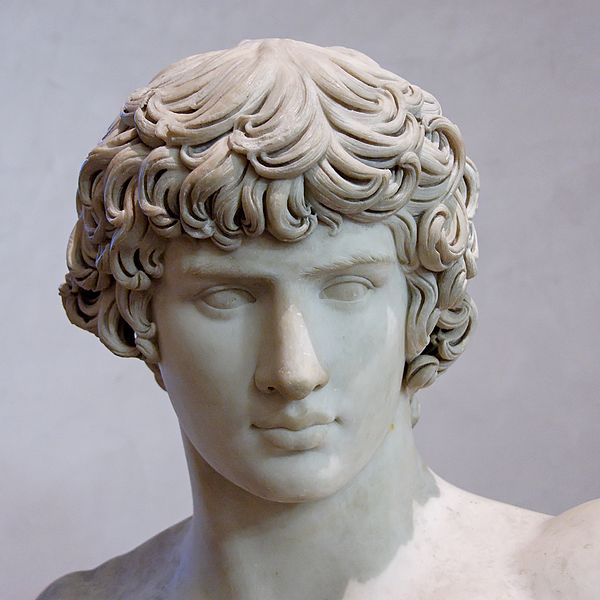
History Hunks: Antinous

Gentlemen...

Gentlemen…

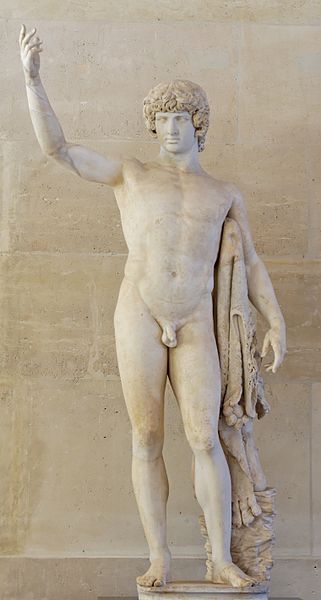
Ladies and gentlemen, but mostly gentlemen, nah just gentlemen; This curly haired cherub is Antinous. He was known as one of the most beautiful men of the Classical world by contemporary scholars and our sources. Whether or not this was the widespread case or the desperate attempt of a certain Emperor to justify the deification of Antinous in his grief, I suppose we’ll leave to the Classical Antiquity Beauty Pageant. But, honestly, not really anything is known about this guy. Except that Cassius Dio managed to find out that he was from Bithynium. And, uh. Yep.

I've seen more rippling torsos on a statue. I mean, just sayin'.

I’ve seen more rippling pectorals on a statue. I mean, just sayin’.

Anyway, the reason this guy is famous and why you can pretty much find his bust/image in quite a few museums across Europe is because he was the “boy favorite” of Emperor Hadrian of wall-building-in-Britain fame. If you don’t know what is meant by ‘boy favorite’, then I’ll tell you that after Antinous’ death in 130AD, a notorious tabloid-like and frequently debunked historical source The Historia Augusta was talking some smack:

While sailing on the Nile he [Hadrian] lost his Antinous, for whom he wept like a woman.

And while you SHOULD generally take whatever this source says with a grain of salt, it is believed by most scholars that their relationship was fairly sexual. I mean, unless you’re that one lone denier who thinks it is completely platonic for a guy to venerate and order the people under his will to erect statues in honor of Antinous’ beauty and worship him in a cult fashion. Mhm. Yeah. “Just friends”.

What I find most curious about the story between Hadrian and Antinous is what information we have concerning his death, drowning in the river Nile.

Some sources say that he was sacrificed, either by himself or others, because of his beauty.

In the case with Cassius Dio’s writing he seems to suggest:

…and he died in Egypt, either by falling into the Nile, as Hadrian writes [lost], or, as the truth is, having been offered in sacrifice (hierourgethesis). For Hadrian was in any case, as I have said, very keen on the curious arts, and made use of divinations and incantations of all kinds. Thus Hadrian honoured Antinous – either on account of his love for him, or because the youth had voluntarily undertaken to die for him

Sounds like something a Shakespearean character in love would do.

So, what do you all think? Hot or NOT?

A Touch of Classical Wisdom V

Socrates used to call popular beliefs “the monsters under the bed”–only useful for frightening children with.

Marcus Aurelius, Meditations.180 c. AD