Versatile Blogger Award!

img_7317

The lovely https://simplydeeindc.com/ nominated me for the versatile blogger award! Simply Dee is refreshingly honest and open about writing and pursuits of passion,  lives adventurously, and manages to keep a positive and motivating energy through it all! I love keeping up with and reading about her life and latest explorations, and I think all of you will too! She’s also the sweetest blogger I’ve come across on this site and if any of you need a little more light in your life, go visit her blog and hit that follow button! Now onto the rules–

The rules for the versatile bloggers award:

  • Thank the person who nominated you with a link to their blog
  • Share 7 things about yourself
  • Nominate bloggers for the award

I’m usually talking about dead people on this blog and not myself, so this should be fun!

  1. Believe it or not, I was absolutely terrible in high school. I know, I know, what I do here is basically glorified homework, so it might come as a shock to all of you that I hated doing it in actual school. Growing up, I was the perfect teacher’s pet version of Hermione Granger and enjoyed getting my straight A’s, but then Teenager Me happened. I got kicked out of AP American History because I refused to do the book report on Killer Angels. My European History teacher pleaded with me to do my homework because I was straddling a C in the class but was killing every test. It also bothered her that I wasn’t taking her AP course and my reason for not was, eh, homework. Once I got to college, however, I started to have a bit more fun with it and after I graduated, created this blog to help feed my need to continue researching and learning more!
  2. My favorite Historical Figure is Marcus Aurelius, yet I’ve never done a post. I’ve mentioned him off hand a few times, and his son Commodus is one of my most popular posts on here. But Marcus Aurelius was more than just a Roman Emperor and I really fell in love with him when I picked up a copy of his meditations at my local bookstore forever ago. He was thoughtful and considerate of himself at all times and detailed his journey with philosophy in his journals. He was raised on Stoic teachings and was incredibly humbled by them. I’d love nothing more than to sit down with him over coffee and pick his brain a bit!
  3. If I could go back in time to any era in history–I wouldn’t. People ask me this question often when they find out how much I love history, but I gotta say–I’m pretty firm in my content existing in this timeline. As a woman, I stand the best chance of having the freedom to chase my dreams now than I ever could at any time in history. Now, if I were able to go back in time as an invisible omnipresent being then we have ourselves a real thinker!
  4. I have seen Mad Men all the way through more times than I can recall. I can’t explain it other than this TV show is just perfection. I never thought I would particularly care to see an American 1960’s period piece, as you can see, I’m pretty much exclusively endowed with Classical-Medieval fare, but here we are. I’ve seen them so many times, you could name a particular quote or scene and I will know exactly where you are and will be able to immediately discuss with you. I don’t even particularly care for Don Draper but I love all of it, even when the characters break my heart.
  5. I have history blind spots and I’m not happy about it. My friends come to me a lot with history questions, and I love it, but there is so much that I don’t know! Entire periods of history I know only basics of, areas of the world where I couldn’t tell you heads or tails what happened there unless it had something to do with something I DO know. For example, I can’t cover much of anything Eastern Civilization unless we want to discuss The Golden Horde! I know it’ll take a lot of independent study, but I’d love to fill the gaps I have one day.
  6. I have over 5 books in various stages of completion and I’d love to finish one! One thing you should all know about me by now is that I’m a terrible procrastinator with plenty of lofty ideas I struggle to complete. So it’s probably not a complete shocker that I’ve got a handful of book ideas on the back burner. Since I was a kid, it was always a dream of mine to write one and have people read it–J.K. Rowling was my hero, after-all. I have a lot of work to do, but one day I hope to have one finished and ready to go!
  7.  I’m a rule-breaker. And always have been! So watch me leave and wave off this last fact with a…oh, crap, wait!


And now, for the blogs I nominate for this award:

http://twonerdyhistorygirls.blogspot.com/ 

https://lovetravellingblog.com/

https://stridetheearth.com/

https://nonwashablegamer.com/

http://brendaknowles.com/blog/

http://the-history-girls.blogspot.com/

https://ordinaryadventures44.wordpress.com/


Happy blogging, everyone!


Joan of Arc: Drunk on the Divine


Joan of Arc

Comedy Central dropped a hilarious clip yesterday from Drunk History on Joan of Arc, which for the un-initiated, is a show where comedians get completely smashed and re-tell something that happened in History. Then their drunken stupor of history facts is dubbed over and re-enacted by other comedians. Basically, the perfect show for me.

Aaaand that’s pretty much the gist of what happened! Knowing me though, I felt like offering a bit more context for those who were smitten to know more about the raging Maiden of Arc.

Continue reading

Aristotle on Pursuits of Good, the Nature of Political Science, & Happiness


Image result for aristotle

Aristotle – The Nicomachean Ethics


Chapter I: The Object of Life

I. Every rational activity aims at some end or good. One end (like one activity) may be subordinate to another.

Arts, sciences, etc. All of these strive for the outcome of a good or purpose (Aristotle defines good as ‘that at which all things are aimed’), some activities are thus directly linked to outcomes that are done for a particular end goal in mind. Some are done for their own sake, while others are done for a ‘supreme good’. Aristotle uses the example of horse trapping being subordinate to horsemanship which is related to military action with the intended outcome being of victory. It doesn’t matter what you are doing only that all outcomes are recognized to be generally achieved for the good. Does it not follow, then, that a knowledge of the good is of great importance to us for the conduct of our lives? Are we not more likely to achieve our aim if we have a target? This is why Aristotle believes it is important to outline the definition of what is ‘Good’ and how that is achieved by these (or specific) activities.

Continue reading

A Touch of Classical Wisdom XI

Bamboo books, so much cooler than paper

So it is said that if you know others and know yourself, you will not be imperiled in a hundred battles; if you do not know others but know yourself, you win one and lose one; if you do not know others and do not know yourself, you will be imperiled in every single battle.

-Sun Tzu, The Art of War [1]

Continue reading

Levitating Caesar, a Wild Honeymoon, and a Whole Lotta Death

This week on History Around the Web, find out how Elizabeth Bennet afforded all those books, how King’s used a bit of magic to wow their subjects, and how ancient people built things (without the help of extra terrestrials, okay):

phelps-honeymoon-22-adapt-885-1

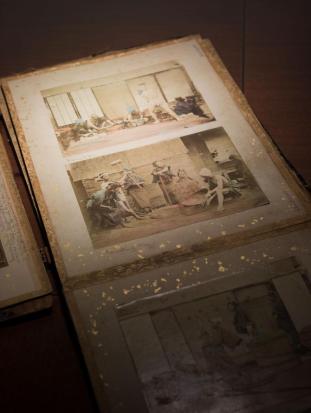
Vintage Pictures From a Dramatic, Five-Year Honeymoon Around the World

One imagines Eleanor and Harris Phelps must have traveled with a great deal of luggage. Things tend to pile up during half a decade of world travel: clothes, toiletries, visas, curios … and, in their case, more than a thousand souvenir photographs.

Continue reading

A Touch of Classical Wisdom X

remnant-trust-nicomachean.jpg

Earth, like a lover, longs for rain

The holy heaven, too, being filled with rain,

Yearns on the Earth to fall.

-Euripides, Fragment 898 [1]

Continue reading

An Ancient Decapitation, Great Flood, & Greek Double Standards

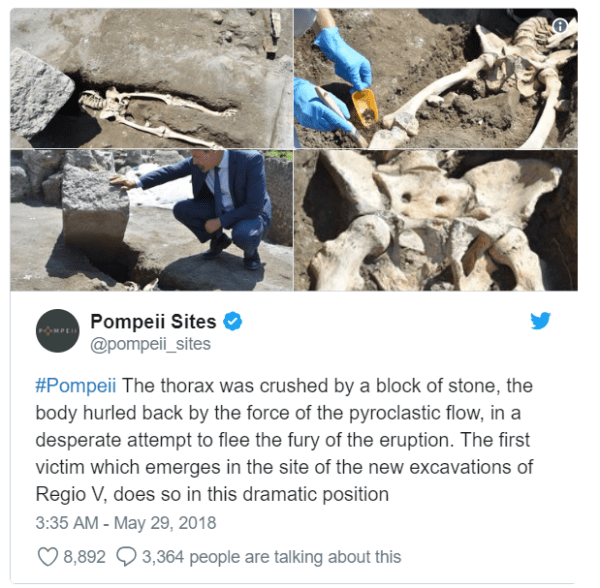
This week on History Around the Web: a U.K. library experienced some wrath of nature and Twitter Historians were as hilarious about it as you’d expect, Pompeii continues to surprise with some well-preserved macabre, and more!

Continue reading

A Touch of Classical Wisdom IX

Feuerbach_symposium_Agathon.jpg

Anselm Feuerbach (1829–1880), Das Gastmahl des Platon, 1869 [1] Agathon as depicted in Plato’s Symposium

Art has a love of chance, and chance for art.

-Agathon, Fragment 4. He means to say that the two are inseparable from one another. [2]

Continue reading

Harry Potter and the Arthurian Shipwreck Grave (Also, Hitler was a Vegetarian)

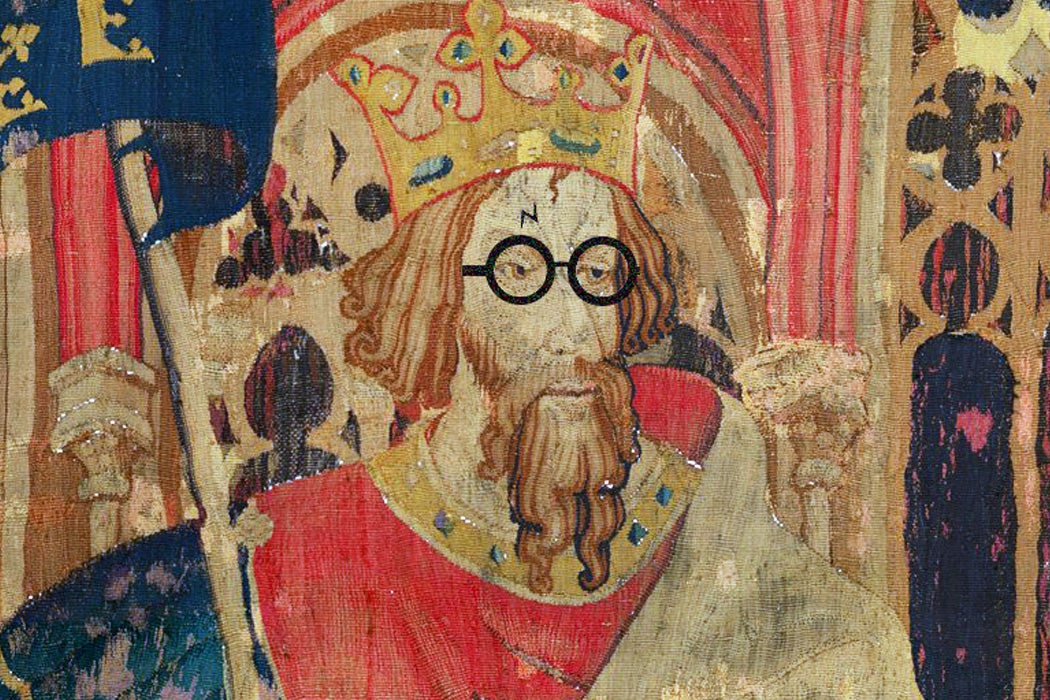
This week’s History Around the Web brings us some Boy Who Lived mixed with King Arthur, Anne Frank’s newly discovered ‘naughty’ pages, Royal Wedding humor, and more!

King Arthur Harry Potter

Harry Potter, the Arthurian Romance | JSTOR Daily

Twenty years after the U.S. publication of Harry Potter and the Sorcerer’s Stone, the “Boy Who Lived” shows no sign of dying, with a record-smashing Broadway show, new editions of all seven novels, and a traveling museum exhibit (the most successful of all time at the British Library).

Continue reading

King Slayers: Charles VIII Knocking on Death’s Door

220px-Charles_VIII_Ecole_Francaise_16th_century_Musee_de_Conde_Chantilly

He certainly does look “Affable”

It almost seems like it’s a prerequisite to be both a French King and histrionic in death. I mean, when hunting accidents, executions, and bizarre gangrene infected limbs make-up the brunt of the company, it seems a bit cliche to just up and die of natural causes.

Part of the reason I’ve been interested in focusing on this series is because I’m still baffled by the completely mundane or stupid way these Royal Dudes have gone so far. And that’s largely due to the idea that royalty is somehow above us, an assumption fostered by the Will of God in declaring a divine right to rule (or, of course, all the people in charge want you to believe). I have plans to get into the Divine Right of Kings or the Mandate of Heaven someday on this blog, but for the basics–as a concept, it was an idea that a King was granted earthly powers through God in the same way as religious prophets/leaders were. The idea existed in Western and Eastern civilizations and it wasn’t that hard to stomach since the tradition of a mortal being imbued with special powers was no stranger to mythology. The fact that you had some kind of godly figure sitting on the throne accepted by large swaths of the population isn’t that questionable either, since you could take a quick search on Twitter and learn that people will believe just about anything if it means their leader is infallible and preferential in some way…

800px-Karl_VIII._empfaengt_Franz_von_Paola_in_Amboise

See?!

But for this next king, Charles VIII, it’s really hard to reconcile how anyone could find this guy anything other than divinely stupid in the way in which he chose to leave his mortal coils. And as it was so lovingly put in indignant bafflement:

And so the greatest king of the world is dead to the most ugly and dirty place of his court. Admittedly, this filthy place was too unworthy of this great and illustrious king and his fortune.Pierre de Brantôme, 16th century French Historian [1]

If you’ve been following along with my blog, I’ve already turned the embarrassing way he met his end into a punchline. But for those who are new, come on in (but please, watch your head) and listen to the tale.

Continue reading