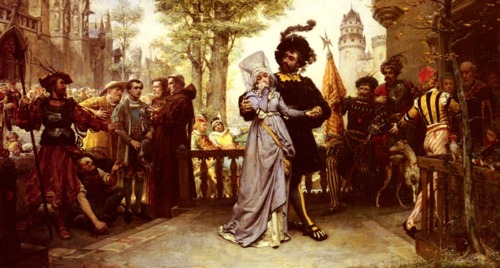
That Asshole Commodus

Accurate.

As most of the popcorn munching smelly theater seat dwellers know by now, Gladiator was a pretty manly and kick-ass flick that was every bit deserving of that Best Picture golden boy as Saving Private Ryan was….OH WAIT. Anyway, it would seem that most movie-goers find themselves quite familiar with Joaquin Phoenix’s portrayal of an eccentric Dumbledore murdering, “bosom breast children LOVE ME PLEASE”, Russell Crowe neck stabbing weeny who desperately DESPERATELY wanted to get laid by his sister. All of this behavior was cultivated under the moniker which was favorably earned by friendly slaughter, “Roman Emperor” and the every man name Commodus, which was probably earned by a little pantsless attire. When in Rome.

And while this was an enjoyable prestigious role that almost won Phoenix the Oscar, it is still a highly fictionalized version of one of the most hated men in the Roman Empire. Because, maidens and clergy, there really did exist a Roman Emperor of same name who certainly was, in fact, an asshole of epic proportions.

“Champion of Secutores; only left-handed fighter to conquer twelve times one thousand men.”
Translation: Over-compensating for something.

The man who would, during his reign, believe he was the totally plausible, completely for real, reincarnation of the mythological Greek figure Hercules, grew up with all the makings of a successful Roman Emperor. He was one of the still breathing sons of the “Philosophical King” and my personal Guru, Marcus Aurelius, who is known both historically and academically as the last of the Five Great Roman Emperors. Basically, it all went down hill after Commodus, leading the senator and famous historical source Cassius Dio to remark that, after the ascension, Rome went “from a Kingdom of gold to one of iron and rust”. And Edward Gibbon, famous for his historical narration and publication of The History of the Decline and Fall of the Roman Empire, marks Commodus’s reign as the beginning of the decline. So, basically, I guess, when you leave a sprawling imperial empire on the shoulders of an ego-maniacal jock-strap like Commodus, everything falls to the poop latrines. To bear the brunt of responsibility over fiddler and diddler Nero and Equastrian Caligula basically skyrockets Commodus’ douche points from the get go, but don’t worry. He earned a lot more over the course of his 12 years and 9 months reign of chaos.

Near the end of Marcus’ legendary reign which included besting the Parthians and Germanic tribes while finding time to scribble out one of the great achievements of Stoic philosophy and authoritative duty, The Meditations, Aurelius brought his son Commodus up to the position of Co-Emperor. Marcus probably did this in the hopes of passing along many years of governing wisdom and to ensure a painless transition and proper foothold into running the Empire like a just and thoughtful King as his son had always been raised to be. And as Commodus’ learning throughout the years was at the hands of, whom Marcus regarded as, the top intellectual minds of the time, it would seem that he had every right to believe his son would serve himself and Rome proud. Unfortunately, after Marcus’ death, this didn’t appear to be the case. Leaving his earthly body behind after an illness during a military campaign (scholars suspect the plague, not “fathercide” as the film Gladiator suggests), Commodus became the sole ruler of Rome at the ripe old age of 18 and the first thing he did was reduce the purity of Roman currency. And while the amateur economists in the audience are already pulling their hair out at this harebrained (hah!) move, let me spell out what happened:

Roman currency, at that time, traded in gold, silver, brass, and copper coinage. So when reducing the value (which was more heavily attributed to the Denarius, a small silver coin) the weight of these coins was lessened, but attained the same monetary value while be essentially worth far less that what it deserved. So how do you make up for this short-sight in trade? Inflation, baby. And as the elite class would mostly be trading in gold coinage, the classes who got hit the hardest were the middle and poor, naturally. General impoverishment all around! Thanks, Commodus. To be fair, he was following in the steps of Nero who already previously reduced the value of coinage, but as a bleeding economy was a continuous battle for Rome throughout its decline, making the same mistake twice is just damn annoying.

This immediately earned the attention and displeasure of the Senate and his father’s old advisors, but whomever disagreed was put out of their misery. In fact, during his reign, Commodus experienced a great many plots conspired by rivals and even his sister Lucilla which probably led him to grow so paranoid that he begun killing anyone who even so much as gathered up a dissatisfactory cough in his presence. His ‘biggest fan’, Cassius Dio, chronicles the general absurdity of the drama below:

Commodus was guilty of many unseemly deeds, and killed a great many people. Many plots were formed by various people against Commodus, and he killed a great many, both men and women, some openly and some by means of poison, secretly, making away, in fact, with practically all those who had attained eminence during his father’s reign and his own. I should render my narrative very tedious were I to give a detailed report of all the persons put to death by Commodus, of all those whom he made away with as the result of false accusations or unjustified suspicions or because of their conspicuous wealth, distinguished family, unusual learning, or some other point of excellence.

And though Cassius Dio had reason to hate Commodus as he taxed the senators heavily, much of his contention had to do with the fact that the state economy was in shambles and yet Commodus’ main concern was spending all of his funds on wild beasts and gladiators, for, as I forgot to mention until now, Commodus was a massive Jughead who loved to show off his skill in the Colosseum. This would be fine, you know, if he was participating with any ounce of sportsmanship, but all of his combats were met with shoddy victories as all of his opponents submitted because he was Emperor and not truly a gladiator. He boasted skill in combat and was a supposed master of marksmanship, but had his unknowing gladiatorial rivals executed before they even knew they were competing in skill with the Emperor. As was the case with Julius Alexander, in a fit of badassery, he killed a lion with a javelin while on horseback. So then Commodus killed him with an order while riding on his megalomania chariot of douchebaggery. Because Commodus was the best gladiator that ever was, so great in fact,  he charged the city of Rome 1 million sesterces for every appearance he made in the Colosseum, whether there was an audience or not. And if the populace weren’t too busy laughing at him, or feeling a deep sense of shame that their fabled ruler would show up naked or insist on sleeping in the gladiatorial barracks, they would mostly stay away all together unless they wanted to chance getting shot at by Commodus himself while he reenacted Hercules and the Stymphalian birds. And again, what should have been a challenging expedition of showmanship (At 1 million sesterces you gotta be kidding me) turned out to be nothing more then, by Herodian’s account;

A terrace encircling the arena had been constructed for Commodus, enabling him to avoid risking his life by fighting the animals at close quarters; rather, by hurling his javelins down from a safe place, he offered a display of skill rather than of courage.

And with all that “display of skill”, Commodus went through Ark-fulls of exotic beasts, leading Cassius Dio to blithely insinuate that the one reference he could make on Commodus’ career as a whole was that he happened to dispatch five hippopotami together with two elephants on two successive days as well as killing rhinoceroses and a camelopard by himself. And that’s sort of it. And, naturally, those beasts didn’t come cheap, and Rome continued to pay for the Ego of Commodus. In an attempt to scrape up funds, he brought false charges on male and female citizens offering them a “pass” from death at a large price in the guise of a voluntary offering. IS HE NOT MERCIFUL?!

When he wasn’t busy making an ass out of himself to the general public by clubbing amputees for fun in the Colosseum, he was erecting golden statues of himself in the attire of Hercules, you know, just in case people didn’t get that he was a super cool gladiator and a reincarnation of the guy. But that certainly wasn’t enough, and assuming the Romans felt the same way about his awesomeness as he did, he renamed all of the Months after himself and even rechristened Rome ‘Commodiana’.

And much to the chagrin of the Senate, he continued to make threats and shake around bloody Ostrich heads at them in case they forgot that he was a looney tune. He even went so far as to troll them with this message upon every address, complete with all of his fake title additions earned and given by himself;

The Emperor Caesar Lucius Aelius Aurelius Commodus Augustus Pius Felix Sarmaticus Germanicus Maximus Britannicus, Pacifier of the Whole Earth, Invincible, the Roman Hercules, Pontifex Maximus, Holder of the Tribunician Authority for the eighteenth time, Imperator for the eighth time, Consul for the seventh time, Father of his Country, to consuls, praetors, tribunes, and the fortunate Commodian (the renamed title of Rome, remember) Senate, Greeting.

He forgot, of course, to add most hated man in Rome. But in his final act of douchery, he left lying around for anyone to see, a “death list” in which he had scribbled down the names of his current mistress Marcia, bedsteward Eclectus, and praetorian prefect “Quintus” along with a handful of his father’s old senators. The two former obviously stumbled upon it because that dick wrote it out before bedtime, and they shared it with each other and were able to hatch a last minute attempt to rid Rome of what Cassius Dio called “a greater curse to the Romans than any pestilence or any crime.”

And so, in the most fitting end in the history of everything, Emperor Commodus was strangled in his bath by an athlete named Narcissus. It can’t get any more perfect then that.

Fact Check it, yo!

Secondary:
Edward Gibbon, The Decline and Fall of the Roman Empire. Vol. 1. Chapter 4: The Cruelty, Follies, and Murder of Commodus.1776.

Lars Brownworth. Lost to the West: The Forgotten Byzantine Empire That Rescued Western Civilization.2009.

Primary:
Cassius Dio, Roman History. Epitome of Book LXXIII

Herodian. History of the Roman Empire. Book 1.

A Touch of Classical Wisdom IV

Perfer et obdura; dolor hic tibi proderitolim. Be patient and tough, this pain will serve you one day.

~Ovid (43BC- c. 18AD) A famous Latin poet and precursory to the works of Dante, Marlowe, and even Shakespeare. So he was kind of a big deal.

A Touch of Classical Wisdom III

Care for what you happen to have. Nothing can truly be taken from us. There is nothing to lose. Inner peace begins when we stop saying of things, “I have lost it” and instead say, “It has returned to where it came from.” Have your children died? They are returned to where they came from. Has your mate died? Your mate is returned to where he or she came from. Have your possessions and property been taken from you? They too have been returned to where they came from.
Perhaps you are vexed because a bad person took your belongings. But why should it be any concern of yours who gives your things back to the world that gave them to you?
The important thing is to take great care with what you have while the world let’s you have it, just as a traveler takes care of a room at an inn.

~The Art of Living, Epictetus; a Roman Stoic philosopher and teacher. (c. 55-135AD)

The Land of Wa!

20130708-153717.jpg

Say waaaaa?

…deepest apologies for that.

Anyway, the land formerly known as “Wa” is actually a place all of you are familiar with. Perhaps the Chinese decided to call them that because there was a “Great Wave” of crying after finding out the Four Inventions were created by someone other than the inventors of, well, nope, the Chinese invented Ramen too. On the same moon phase now? Good! (Also, do you know what the “Four Inventions” are? See if you can guess; the answer is on the bottom! Ganbatte!)

Since I know very little about the History of Japan other than that Tom Cruise saved the Samurai from being forgotten in time (I kid), I’ll be doing a bit of studying that goes beyond reading volumes of Rurouni Kenshin.

So, to prepare myself and you for this journey into the Empire of the Sun and Sailor Moon, I leave you with a passage I came across which describes Early Japan (Yayoi) from a 3rd century AD Chinese perspective! And to get you all on track, 3rd century AD means we’re talking about Han Dynasty and afterwards the Three Kingdoms. So Dynasty Warriors. Okay, enough talk!

The social customs [of the Wa] are not lewd. The men wear a band of cloth around their heads, exposing the top. Their clothing is fastened around the body with little sewing. The women wear their hair in loops. Their clothing is like an unlined coverlet and is worn by slipping the head through an opening in the center. [The people] cultivate grains, rice, hemp, and mulberry trees for sericulture. They spin and weave and produce fine linen and silk fabrics. There are no oxen, horses, tigers, leopards, sheep, or magpies. Their weapons are spears, shields, and wooden bows made with short lower part and long upper part; and their bamboo arrows are sometimes tipped with iron or bone…

The land of Wa is warm and mild [in climate]. In winter as in summer the people live on vegetables and go about bare-footed. Their houses have rooms; father and mothers, older and younger, sleep separately. They smear their bodies with pink and scarlet, just as the Chinese use powder. They serve meat on bamboo and wooden trays, helping themselves with their fingers. When a person dies, they prepare a single coffin, without an outer one. They cover the graves with sand to make a mound. When death occurs, mourning is observed for more than ten days, during which period they do not eat meat. The head mourners wail and lament, while friends sing, dance, and drink liquor. When the funeral is over, all members of the whole family go into the water to cleanse themselves in a bath of purification.

When they go on voyages across the sea to visit China, they always select a man who does not arrange his hair, does not rid himself of fleas, lets his clothing [get as] dirty as it will, does not eat meat, and does not approach women. This man behaves like a mourner and is known as the fortune keeper. When the voyage turns out propitious, they all lavish on him slaves and other valuables. In case there is disease or mishap, they kill him, saying that he was not scrupulous in his duties.

Yikes. Paint a vivid picture?

Fact check it yo!

Tsunoda and Goodrich, Japan in the Chinese Dynastic Histories–
Later Han Through Ming Dynasties,
pp. 10-11.

A History of Japan R.H.P. Mason & J.G. Caiger. Revised Edition, 1997.

The Four Great Inventions were: Gunpowder, Papermaking, Compass, and Printing! Thanks, China!

Prima Nocta or Prima “Not”?

Image

One classy evening after a long night of getting paid to repeatedly explain where the restrooms were and pouring the occasional decaf, I felt like unwinding with a game of Animal Crossing (had some big loans owed to that skank Tom Nook) and a viewing of Braveheart because I’m rock n’ roll and really like that scene where Mel Gibson gets hanged, drawn, and quartered. Oops, spoilers.

There must have been a considerable amount of time since I last saw the movie and between that must have had tea and crumpets with a history book because, suddenly, I took offense at the very mention of ‘Primae Noctis’ and the fact that all those Scotties were prancing around in kilts (but that’s a post for another day).

For those unfamiliar, Primae Noctis or the French version Droit du Seigneur, was the idea that a lord was within legal rights to take the virginity of a serf’s daughter, most notably, on her wedding night. We see this concept perpetuated in Braveheart when crotchety ol’ King Edward I of the Britains enacts this law to “breed out the Scots” and we see a few fug lords wedding crash on the friend of William Wallace which escalates quickly into war and the entire point of the film and Mel Gibson’s career.

Braveheart isn’t alone, though. The Office, Game of Thrones, Merlin, and Family Guy reference it. And if you were living in the Enlightenment Era, you had the Marriage of Figaro or some of Voltaire’s sass to help spread the fire. What is even more strange and can possibly be found to prey victim to the widespread misconceptions present through these times is that some notable scholars even believe it, toting around ‘evidence’ where there is none.

So how did this happen?

Obviously, with something like this, you need an account or source that has either witnessed, observed, or found any sort of legal documentation of this act being practiced. Curiously, with a right as supposedly as widespread as we are led to believe, almost nothing exists and yet a few scholars are determined to hold the belief that it was a real thing. Or it happened in the Dark Ages, duh. Or France at least, yes, at least France. (Always France).

These select few will point to Herodotus (who, if you’ve been keeping up with me, know that I am already familiar with) and say, “Herodotus claims daughters of Babylon had to offer their virginity to a stranger!” [citing paragraph 199 Book 1]

The fact that Babylon =/= Medieval Europe and a vastly different political climate and caste system is neither here nor there because a closer look at what Herodotus actually said is more illuminating and vastly more interesting.

After detailing how Babylonian men found wives during marriage auctions (It’s like the dowry, women are either property or a burden) Herodotus goes on to say,

…has now fallen into disuse and they have of late years hit upon another scheme, namely the prostitution of all girls of the lower classes to provide some relief from the poverty which followed upon the conquest with its attendant hardship and general ruin. [Book 1 para. 196]

No sign of putative legal rape here, folks, just the exercise of the oldest profession in the world. Oh, but wait. Here’s the passage being referenced in support of the claim (Book 1, para. 199) check it out:

There is one custom amongst these people which is wholly shameful: every woman who is a native of the country must once in her life go and sit in the temple of Aphrodite and there give herself to a strange man.

Oh, sure. Taken out of context, I suppose you could take out some phrases and compare this to a feudal sex crime, but what this is actually referring to is a form of phallic worship which was common in the area as detailed by Westermarck in the penultimate History of Human Marriage. Herodotus goes on to detail that the woman enters the temple, is offered a silver coin as bargain, and slept with in order to complete the religious rite. This can be seen as a form of ‘sexual sacrifice’ in the form of worship which wouldn’t be all to dissimilar with the antics of Aleister Crowley’s crew.

Herodotus DOES, however, write in Book 4 about the Adyrmachidae tribe in Libya who are guilty because

They are the only Libyan tribe to follow this practice, as also that of taking girls who are about to be married to see the King. Any girl who catches his fancy, leaves him a maid no longer. [para. 168]

But note the “only” and the “Libya” and a few thousand years, and this example is further away from Medieval Europe than indoor plumbing.

So Herodotus had a small mention, but how did this translate into a giant boogie laden finger pointing at Europe?

Well, Dr Karl Schmidt, a German and a doctor so enuff said, believes it “was only a learned superstition” and that it originated from culagium, a requirement that a serf get permission to marry, and such a permission often required the peasant to pay a fee or give some kind of service (not prostitution, okay, calm down). This apparently appeared to come up in the consequence of marrying under the lands of another Lord, as it would be like losing a ‘headcount’ and a laborer by right so compensation was in order. So the “right of the Lord’ was more likely a tax rather than a romp in the Motte-and-bailey.

And the idle belief that the higher clergy practiced Droit du Seigneur in Middle Age France? (Geez, again with this? Let them rebel in peace)

This misconception could have stemmed from the symbolic “possession” of a man’s wife by the church as it was a requirement that for three days and three nights to go by before any copulation happened because of the “spirit of solemn devotion”. But, mostly, because any ecclesiastical authority could be thus payed off with a nice meaty fee if you wanted the privilege of the dirty deed on the first night instead. Certainly, there was a legal rape happening here, but not one of the flesh…

Of course, there is also Boece, an established uncredible source who fabricated many narratives, who wrote of an event that happened more than 700 years before he did. I shudder to think this may have been the basis for Braveheart

And othir law he maid, that wiffs of the commonis sal be fre to the nobilis; and the lord of the ground sal have the maidenhead of all virgins dwelling on the same. [The Chronicles of Scotland. 1938.]

Perpetrator of myths not history. And if this didn’t help spread it, Voltaire’s cheeky comedy ‘Le Droit du Seigneur: Comedie en vers’ and his parallel criticisms of a pre-revolution/enlightenment satirical view of early France has probably got him giggling around in his grave now that common knowledge totes Primae Noctis around like a slutty party girl.

Either way, somewhere between no evidence to shady business to disrespectful double-takes and biased views of civilized society, we have a gross pock mark on the history of Medieval Europe (well, two, if you’re also counting the pestilence. Gosh, I’m witty.) I’m not saying it didn’t happen, I’m sure a position of power and dominance led to frequent abuse of lower classes and sexual violence against women. But it certainly wasn’t a cultural or legal custom that was practiced without prejudice all across Europe. And in the case of Braveheart, there is no evidence to support an event of this nature occurring on the British Isles unless you want to go sit over there with Boece and the guy who wrote about George Washington cutting down a cherry tree.

So, the next time you’re out making a reference about claiming someone’s wife for a night ala Prima Nocta, that’s me staring you down in the corner and predatorily stalking you with a conversation about violent youth, knighthood, and the Crusades. So just don’t do it, okay?

Fact check it, yo!

Secondary Sources:

Old Babylonian Marriage Ceremonies and Rites. S. Greengus. Journal of Cuneiform Studies, Vol. 20, No. 2 (1966)

The History of Human Marriage. Edward Westermarck. 1891. pp. 72-76-80.

Jus Primae Noctis: Eine Geschlichtliche Untersuchung. Schmidt, K. (1881)

Law, Sex, and Christian Society in Medieval Europe. Brundage, J. (1987)

Jus primae noctis or droit du seigneur. Vern L. Bullough. The journal of Sex Research, Vol. 28, No. 1 (Feb. 1991), pp. 163-166.

Primary sources:

The Histories Herodotus

Other:

The Chronicles of Scotland. 1938. Boece.

The Travels of Marco Polo: The Prologue Part 2

20130623-230703.jpg
Part 1

When last we followed the Polo Brothers, the predecessor adventurers of the renown Marco, they had been outed ‘Caucasian’ and promised a “molestation” free all expense paid journey to visit the great Kublai Khan in the East.

Rusticello da Pisa (if you’re still with me, the convict turned author of The Travels of Marco Polo) assures us that Pops and Uncle Polo saw many great things on the year long journey to the Khan, but ain’t nobody got time to document that, and, besides, “Messer Mark, who has likewise seen them all, will give you a full account” later. So tune in later for that. In the mean time, imagine rainbows, raptors, and cheesecake. That’s what they have over there, right?

So anyway, fast forward to the court of the Great Khan where our heroes are met with honor, hospitality, and a riveting game of 20 questions. And no sign of cheesecake, my bad.

Clearly passing this initial test of questioning and divulging all the secret information about the mystical beings known as the “Latins”, Kublai Khan must have been incredibly inspired by this, because he immediately wanted to send an Embassy to the Roman Pope which would include one of his own Barons and, of course, the master riders of tail coats, the Polo brothers themselves. The goal was to pass along a love note in class which expressed the hope that the Pope would send over a hundred Christians who could call themselves intellectuals and fair acquaintances of the Seven Arts. (Knowledge of Rhetoric, Logic, Grammar, Arithmetic, Astronomy, Music, and Geometry. Liberal Arts degrees used to be worth something, kids. Not to mention, music would have never been considered back than to be in a position of budget cuts as the ability to play or have knowledge of music was the mark of a brilliant man. Now of course, today, we have Justin Bieber.)

The reason Kublai was so interested in making friends with people who habitually drew fish in the dirt wasn’t to throw a lavish Christmas party. He was inviting them to knock on his door and provide logical discourse in comparing the Law of Christ with all those other hokey religions. If they were successful in proving the superiority of a relatively adolescent and already fractured religion over other ones, than he would gladly convert himself and his people to Christianity. Also, he really wanted some Oil from the Lamp that burns in Jerusalem on the “Sepulchre of Our Lord”. If you forget the oil from the lamp than I will SEND IT BACK.

Kublai sent his new Polo owls on their way with a Tablet of Gold (shown above with a very white looking Khan) which worked like a passport and just to remind everyone of how badass he was. Good thing too, because the Khan’s probably “green” Baron who was accompanying the group got sick and was not at all suspicious that the Polo brothers were totally happy and cool with going on without him and taking the shiny gold tablet with them.

Well, apparently they journeyed for three years. (Mmmhmm. I know, right? More like journey straight into a BROTHEL for 3 years) When they finally arrived in Acre (a major Crusader Kingdom) in 1269 AD. When they got there they learned that the Pope who Kublai so desperately wanted to makey friends with was dead. Like, really dead. Whoops.

Bum-Bum-BUM!

To be continued. And also, WHERE IS MY OIL FOR ZE LAMPS?!

A Touch of Classical Wisdom II

The one who buggers a fire burns his penis.

-Found on the walls of a basilica in Pompeii.

Corpus Inscriptionum Latinarum

Xerxes Versus the Hellespont.

20130523-162537.jpg

Modern day Dardanelles, a sea strait which connects the Balkans and Asia Minor as well as the Black sea with the Mediterranean, has a long history of being the go-to strategic hold for military and trade relations. It’s also been known to be a raging sassy sea mass that obliterates ships and crushes the dreams of empires. It also made Athamas cry.

In one of its most renowned acts of defiance, than called the Hellespont, succeeded in pissing off the purple-y Persian king Xerxes I during the opening acts of a precarious invasion of the Greek mainland.

Xerxes, proud of his Phoenician and Egyptian engineered cable bridges, which were marched about 1.5 kilometers across land for the express interest of laying them painstakingly across the Hellespont so that his army could skip merrily over to Thrace with a smile and a spear in the face, oversaw the completion of his dastardly plan and eagerly awaited his coming success.

Until the Hellespont decided that, “Well, I never voted for you!”, revolted and destroyed the bridges in a violent sea storm, giggling into the tides as it swept away Xerxes’ marvelous pride.

Enraged, Xerxes ordered the unsophisticated and foul dihydrogen monoxide rebel be punished severely for its insolence. Maybe three hundred lashes would get its attention. Also, in the interest of showing it who was boss, he ordered it branded with hot irons. Surely, the spiteful Hellespont snuffed those out quick, so instead a pair of leg shackles were tossed in instead.

And just in case the Hellespont wasn’t getting the message, the whippers were instructed to further berate the sea with verbal abuse that goes as follows:

You salt and bitter stream, your master lays this punishment upon you for injuring him, who never injured you. But Xerxes the King will cross you, with or without your permission. No man sacrifices to you, and you deserve neglect by your acid and muddy waters.

Xerxes eventually crossed, but never forget the courage of the Hellespont on that day and the striking story of the strait that became a bridge slave, the bridge slave who became a storm, the storm who defied a King. Oh, and if you ever happen to come across the Dardanelles in your travels, why not toss in a little love to show your support? Because 4 for you, Hellespont, you go Hellespont.

The Histories
by Hero “The Father of History” dotus.

A Touch of Classical Wisdom

Nevertheless, let us take this business seriously and spare no pains; success is never automatic in this world–nothing is achieved without trying.

-Said by Mardonius, a Persian military commander, at a conference to Xerxes, urging the King of Persia to war with Greece. c. 5th century BC.

SPOILER ALERT: They lose.

The Histories
by Hero “The Father of History” dotus.

Ancient Egypt: The Miracle of Contraception Part 1

20130424-195957.jpg

Ahhh, contraception. One of the most well conceived scientific conceptions of all time…see what I did there?

Women have been trying to wrestle control back from their ovaries since the dawn of civilization. What with a near consistent almost worldwide patriarchy and, if Game of Thrones is to be believed, the hourly struggle for a dude to keep his breeches laced up, the threat of unwanted pregnancy has always haunted the female psyche. Sometimes a woman wants to do other things, guys. Like be a super Senet master or…uh…something else. Nah, but for real, as hard as it is to believe, contraception and preventing pregnancy has been around longer than the idea that women’s purpose is to marry and baby-make.

Even though the debate rages today on just how much freedom a woman is “allowed” to exert over her body, know that if ever one so much as uses the word “tradition” to explain why any form of birth control should be prevented from a modern day and supposedly educated populace, swift kick that fool in the jugular, yah get me?

Because if they don’t already know, the Egyptians have been getting down for ever. I mean, really, what else is there to do on the Nile’s off season?

The Ancient Egyptian recipe for preventing pregnancy (Because frak you, Isis!):

First of all, ladies, in the off chance that your conservative minded government prevents access to the methods I will describe below or if you get stuck with a “blessing from God” in the disguise of a sex crime, you’ve got the best natural and free birth control possible–Breastfeeding!

Women were known to extend their breastfeeding for many years! During lactation, progesterone fails to build up like in a normal menstrual cycle and thus ovulation can be prevented by keeping that kid dependent on the boob! Side note: Perhaps this is why royalty had wet nurses? Not just for social standing implications but to encourage every opportunity of producing an heir?

If the thought of childbirth turns you off though, luckily we have a papyrus from 1850 BC known as the “Kahun Gynaecological Papyrus” which details other means of birth control. (Check it out here)

“Another prescription hin of honey, sprinkle over her womb, this is to be done on natron bed.”

This was a substance mixed with honey and sodium carbonate which was applied inside the vagina. Couldn’t find any modern opinions on if this one in particular worked but than again I admittedly didn’t look hard enough.

One other substance they did use was an acacia gum which was also placed inside the vagina. This does, in fact, contain spermatocidal properties. Compounds of the substance produce lactic acid anhydride which is today used in some preventive jellies. Point goes to Egypt!

The most interesting and somewhat shocking suggestion given by the papyrus for a pessary (for those without a vagina, doctorate, or a girlfriend–a pessary acts as a physical barrier between the cervix and any invading sperm) is as follows:

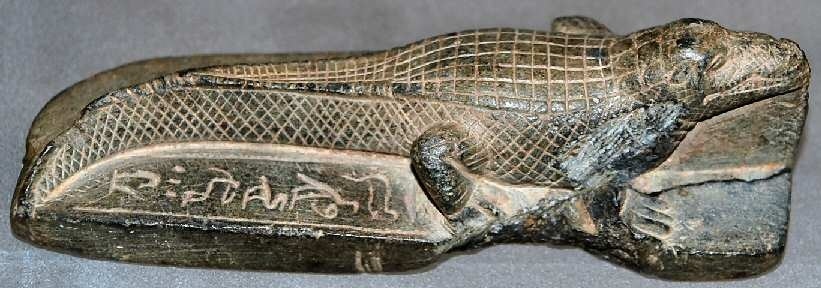
“For preventing […] crocodile dung, chopped over HsA and awt-liquid, sprinkle […]”

Ignore the jumbled untranslated Egyptian text because, yes, that says crocodile dung.

As I try not to imagine dealing with that whole business, science at least puts my mind a little at ease with why anyone would consider such a thing.

It has been suggested by some modern historians that not only would the feces most likely effectively block seminal fluid at the os of the cervix but that it could also change the pH level.

Not good enough an excuse?

Well, John Riddle puts forth the suggestion that inserting feces into a woman’s vagina would, in fact, be an excellent form of contraception because…well, it would keep the boys away, wouldn’t it?

There’s also the idea that such a practice may refer to an incident in Egyptian mythology where the deity Set attempted to harm Isis while she was pregnant. He was typically associated with a crocodile (Not to be confused with Sobek) so, crocodile =/= pregnant.

Either way, I guess they had their reasons.

Any of these sound good to you, ladies? D:

Fact check it, yo!

Contraception and Abortion from the Ancient World to the Renaissance. John Riddle. 1994.

Economic Transformations and General Purpose Technologies and Long-Term Economic Growth.“Historical Record on the Control of Family Size.” Richard G. Lipsey, Kenneth I. Carlaw, Clifford T. Beker. 2005.

Kahun Gynaecological Papyrus. 1850 BC. http://www.digitalegypt.ucl.ac.uk/med/birthpapyrus.html