Christmas Psychosis

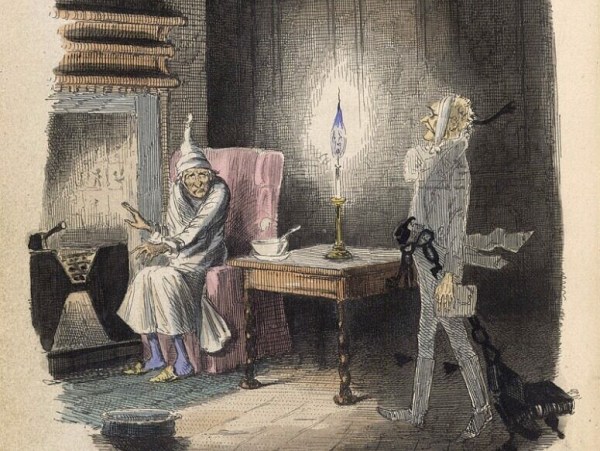
A Christmas Carol by Charles Dickens

‘Tis the season to be jolly, kiss under holly, and have a psychotic break of melancholy. Christmas can often be paradoxical in how much people genuinely love the holidays by counting down the days as early as July or putting up trees well before little kids in costumes harass their neighbors for candy. Others approach the festivities with dread, reminiscing of long-dead loved ones and family traditions, or generally being a grouchy old humbug. For those unfortunate individuals in the latter category, the Christmas season heralds a harbinger of mental illness–a cyclical wave of psychotic woe canopied by snow and the feverous delusions of a Grinch-like low. And also an epidemic of rhymes.

‘Christmas Psychosis’, a phenomenon largely felt by those like me working in mental healthcare who notice a surge of crisis beginning in late November through to the new year, is the idea that something about this time of year triggers a wave of renewed psychotic symptoms in a population already prone. Perhaps one of the most famous iterations of this case is the fictional Scrooge finding himself haunted by hallucinations of ghosts representing the past, present, and future Christmases. A Christmas Carol is a seasonal classic, many of us grew up seeing it performed in theaters, and Charles Dickens was no stranger to depicting bouts of psychotic depression in his works (Garratt, 2022). But is the idea that psychosis comes but once a year, with such prevalence, we ought to leave it out a tray of cookies, one that’s based in reality?

On a scale of 1-to-psychotic, how you doin’?

Since at least the 1950’s, some psychoanalytic thought has suggested that neuroses around Christmas time were because the celebration was focused on the birth of Jesus, the ultimate God’s favorite child over the rest of us, and that this brought up unresolved feelings related to competing against our siblings (Boyer, 1955). As the older and obviously favorite child who was Christmas-gifted the PlayStation over my brother, I can’t say that I’ve ever felt triggered by Jesus for having his own holiday. Though there is some evidence to suggest that being around Christmas-y things can lead to a negative psychological impact on people who are not religious or participating in festivities, who may already be dealing with feelings of exclusion (Schmitt, et al., 2010). There is even a bizarre phenomenon known as White Christmas effect, where researchers use Bing Crosby’s version of the song to study participants’ capability of auditory hallucinations. In traditional versions of the study, the song would be played briefly, and then white noise would be played for the participants. They would be asked if they could hear the song through the white noise, with around half of the people saying they could, and over a majority of schizophrenic participants stating the same. But many researchers suspect the general population may be reporting hallucinations because they were expected to or because they may already be prone to flights of fancy, rather than because songs about Christmas cause psychosis (Scott & Leung, 2025). Though I certainly do feel like losing my mind when Christmas songs are played on retail loops before Thanksgiving.

Is Santa Claus real or just a figment of your imagination? If you see elves, please call 911

But surely there must be an uptick of emergency room visits when it seems like everyone and their dog spends the majority of winter slightly unhinged. That, too, appears difficult to determine. Some studies show there certainly does seem to be an increase in ER visits for psychiatric reasons during the holiday season (Halpern, et al., 1994), but others show that there may even be less utilization of the ER during the holidays for mental health, despite what we assume about psychosis season (Schneider, et al., 2023). However, there does appear to be a noticeable uptick in miserable feelings around Christmas and alcohol-related deaths, with the period after the holidays showing the real increase in psychiatric hospitalizations (Sansone & Sanson, 2011).

So, basically, Christmas Psychosis is all in our heads. Fitting perhaps, but not an unjustifiable conclusion given how crazy things get around this time of year. I will say this, however, if there is any truth to the matter of psychosis for Christmas, maybe watch how much nutmeg you’re putting in your eggnog! That DOES cause hallucinations (Ehrenpreis, et al., 2014).

Fact Check it, yo!

Ehrenpreis, J. E., DesLauriers, C., Lank, P., Armstrong, P. K., & Leikin, J. B. (2014). Nutmeg poisonings: A retrospective review of 10 years experience from the Illinois Poison Center, 2001–2011. Journal of Medical Toxicology10(2), 148-151.

Garratt, P. (2022). Household ghosts and personified presences. In A. Woods, B. Alderson-Day, & C. Fernyhough (Eds.), Voices in psychosis (p.153). Oxford University Press.

Halpern, S. D., Doraiswamy, P. M., Tupler, L. A., Holland, J. M., Ford, S. M., & Ellinwood Jr, E. H. (1994). Emergency department patterns in psychiatric visits during the holiday season. Annals of Emergency Medicine24(5), 939-943.

Sansone, R. A., & Sansone, L. A. (2011). The Christmas effect on psychopathology. Innovations in Clinical Neuroscience8(12), 10.

Schmitt, M. T., Davies, K., Hung, M., & Wright, S. C. (2010). Identity moderates the effects of Christmas displays on mood, self-esteem, and inclusion. Journal of Experimental Social Psychology46(6), 1017-1022.

Schneider, E., Liwinski, T., Imfeld, L., Lang, U. E., & Brühl, A. B. (2023). Who is afraid of Christmas? The effect of Christmas and Easter holidays on psychiatric hospitalizations and emergencies—Systematic review and single center experience from 2012 to 2021. Frontiers in Psychiatry13, 1049935.

Scott, M., & Leung, T. T.-C. (2025). I’m whispering a white Christmas: masking relations in hallucinatory speech. Language and Cognition17, e71.

History and Psychosis

The Scream by Edvard Munch (1893). As the story goes, Edvard was out for a walk shortly after his sister had been committed to an insane asylum. Suddenly, the skies turned red and he sensed ‘a scream’. He depicted this experience of psychosis in his most famous painting.

The crazy thing about psychosis is how misunderstood it is in the popular imagination. What does it mean to have and how do the symptoms manifest?

For those who have been following my blog for years, you’ll have noticed I’ve taken a bit of a hiatus—emerging every so often to post a vulnerable little missive on heartbreak. It shouldn’t be too difficult to piece together the story of what happened, but since then, I’ve kept a promise to that teenager I tutored and subsequently lost when their mother and I were forced to part ways. Back then, I decided to go back to school to earn my degree and eventually become licensed to practice therapy to help others—a goal I had shared with both mother and child. What inspired the change of career path for me was that teenager and the struggles they dealt with while navigating an unsupportive family life as an openly trans kid. Eventually, the pressure and stress of constantly fighting with family led to mental health issues for that teenager which resulted in hospitalization at a psychiatric clinic. There, they shared their experience with symptoms of psychosis with doctors.

Psychosis is defined as an experience that denotes a break from reality–this can range from delusions, hallucinations, and/or bizarre behavior such as disorganized speech. It is a symptom, not a disorder, and can be featured in diagnoses such as Schizophrenia or Major Depressive Disorder. Causes can range from extreme stress, and substance use, to genetic predisposition.

I felt helpless at the time and a little bit scared. What does it mean if someone I love and care about like my own child, hears voices that tell terrible, self-degrading things? What could we do to help? Would they be okay? Part of that promise was doing everything I could to involve myself in uncovering those answers. And though, per their mother, I am not allowed contact with that teenager any longer—I can do everything in my power instead to help those like them. The reason that I have been unable to update this blog is that I have been busy working at a psychiatry clinic since last year and becoming part of the team at our university that specifically treats patients dealing with first-episode psychosis and the research meant to provide hope for the future.

Basically, I’m doing the damn thing. Sempre ❤️

This is, however, my history blog playground for my research dumps where I can humorously recount the things I’ve either taught myself or felt like sharing with the public. Now feels like the perfect time to merge both passions, exploring the presence of psychosis in well-known historical things, events, or people. From the Oracle of Delphi to insanity contextualized historically, to any excuse to write about how much I love Joan of Arc. Famous individuals and artists in history have experienced psychosis and come out making some of the most beloved works in the world…one of them cut his own ear off for good measure too. Many Kings, Queens, and rulers have also suffered and so have others when the consequence of mental illness often leads to wars of succession. Mostly, I hope to also provide a picture of psychosis that is less terrifying–to shed light on its frequency and treat it with the comfort we have in more common mental health struggles like depression. Let’s de-stigmatize. People with psychosis are unwell but they are not inherently dangerous nor should they be treated as such. Let me show you all the brilliant people in history who had it and went on to do extrodinary things, like inventing calculus. Though, I suppose you could say someone would have to be a little mad to make sense of it in the first place.

‘Madness’ in history hadn’t always included the modern concept of psychosis. The term itself was introduced to psychology in the 19th century, and it’s important to remind the audience that some experiences in history will fit the definition of psychosis but may also fall under the umbrella of a cultural or religious phenomenon for some. Think of the prophets and saints, those who prayed and spoke to gods or heard prophecies, or perhaps figures who developed a grandiose view of themselves and thus the confidence to back it (Did Alexander the Great experience psychosis then? Let’s discuss.) Part of this series will be meant to think about the causal relationship between psychosis and ‘normal’ experiences like superstitions and ghost stories. And some of it will be debunking the usual tomfoolery of myths like the Schizophrenogenic Mother or taking a look at the Four Humors theory of the ancient world. Naturally, we’ll need to dismantle ‘hysteria’ and talk about how Nellie Bly should be everyone’s hero. I’ll pick and choose the order, no rhyme or reason most likely, but know that psychosis and mental illness will heavily feature–and we’ll find a way to have some fun with it.

In Vino Veritas: In Wine, There is Truth

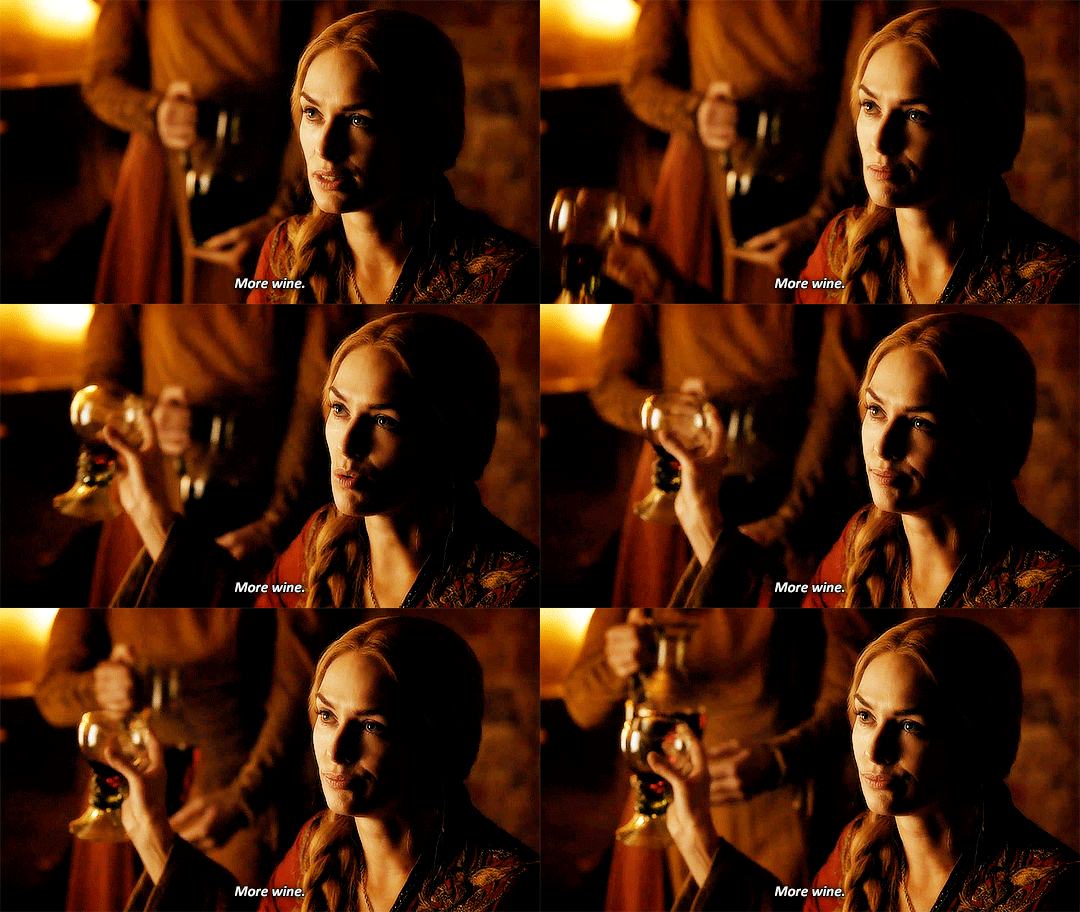
lannistersource - Current mood - need my own cupbearer

How many of us have woken up the next morning questioning ourselves–“Did I really just do that?” Those drunken speeches in jolly confessional that were regrettably recorded on video, the inebriated passion in the throes of another’s embrace, or phoning your ex while intoxicated to express exactly how you still feel about them. Sure, blame it on the alcohol–most people unwilling to accept personal accountability for their secret thoughts and desires will be the first to do so. It meant nothing, I didn’t mean it. But turns out, people have been using this excuse since the dawn of civilization and ancient historians have been calling us all out since the beginning. Drink up, losers, we’re going truth shopping.

…Then it is that all the secrets of the mind are revealed; one man is heard to disclose the provisions of his will, another lets fall some expression of fatal import, and so fails to keep to himself words which will be sure to come home to him with a cut throat. And how many a man has met his death in this fashion! Indeed, it has become quite a common proverb, that “in wine, there is truth.”

Pliny the Elder, Naturalis Historia (Book 14, Ch. 28 Drunkenness)

Not unsurprising, but we can find allusions to the value of drunk minds speaking sober truths all the way back to the 5th century BC. Herodotus, ever the perennial scholar of cultural practices to gawk at, details a custom observed by the Persians in his Histories. According to him, it was common among the Persians that if there were a judgement to be made about a serious decision, it should first be talked over while completely smashed on wine. Afterwards, the decision would then be reviewed the next morning while sober before anyone made any final approval on the matter. If it all still sounded like a good idea while kneading a hangover headache, the measure passed. The same went for the other way around–anyone with a decent thought in the light of day had to wait for everyone to reconsider it first while drunk, you know, just to make sure. [Herodotus, Histories Book 1, 133.] Anyone envisioning any sort of impracticality with this method should be reminded that these tipsy Persians held down an enormous empire for at least 200 years with much success–and would have gotten away with it too if it weren’t for that meddling Alexander the Great.

Drinking Wine GIFs - Get the best GIF on GIPHY
Darius III after that insane flanking maneuver in the Battle of Gaugamela 331 BC

The idea of the truth being found at the bottom of a glass of booze is so pervasive, that some form of In Vino Veritas exists across most cultures around the world in some lyrical thought. “After wine blurts truthful speech”, “What the sober hold in their heart is on the drinker’s tongue”, “A drunken mouth speaks from the bottom of the heart”, the implications here are endless.

When wine enters, secrets are revealed.

Eruvin, Talmud. 65a

So how much honesty really is in the events and words spoken when inhibitions are down, when a person has no reason to stop actions from tumbling out after a tonic of Gin and truth serum? Idioms are one thing, but is there any science or psychological backing to tell us that being an idiot in our drunken moments is exactly who and what we are deep down?

Duh.

Alcohol can’t make you think or feel things

MD Gary L. Malone, Psychiatrist, Is Alcohol a Truth Serum?

One recent psychological study measured the difference between how someone would rate themselves sober versus who they thought they were while drunk…compared to observers who really didn’t notice a change in personality at all between the two states, actually. Except, of course, in being a bit more openly social. Which is exactly the idea behind being more of your true self while intoxicated. [R.P. Winograd, D. Steinley, S.P. Lane, & K.J. Sher 2017]

And despite this, the correlation between using alcohol as ‘an excuse’ for sexual behavior and as a justification for the action itself can be easily measured too–and it turns out, according to this study, a lot of people intentionally use alcohol to lower sexual inhibitions AND to also use it as the blame both before and after the consideration. [T.V. Ven & J. Beck 2009]

Betty White Wine Gif GIFs | Tenor

So, no, getting drunk doesn’t make you a different person AND we also know people are intentionally pretending otherwise to justify behavior they would otherwise not want others to assume they were always capable of while sober. What we do know about alcohol’s effects on the brain, however, is that it results in a surge of dopamine and serotonin (feel good hormones) and it also effects the limbic system which is the seat of the brain that aids in behavioral responses to stimuli and is thought of as primal–the part that would result in lowered inhibitions and any ‘fears’ of expressing the true self. [Hackensack Meridian Health] Essentially, alcohol forces us to be in an Eckhart Tolle ‘here and now’ present where impulse control is minimal, everything is keenly felt in the moment, and with the courage to express it without thinking it through.

For once, the ancient wisdom on the matter may actually have some scientific credibility. So next time you’re facing down a person leaning heavy on the self-preservation that comes with denying their intentions last night because they ‘drank too much’ (or if you’re the one in self-denial) you can either point to the PhD’s or long dead scholars of history. In Vino Veritas.

I’m not bitter but the truth is. Or maybe that, too, is the wine.